Category Archives: Serial Animal Abusers

Security Industry covers cases involving cruelty, neglect or unsafe handling of animals—primarily dogs—used within security, guarding or protection roles. Offences often involve dogs kept in unsuitable or hazardous conditions, inadequate food or water, prolonged confinement, failure to provide rest or shelter, or animals worked beyond safe physical limits. Some cases involve unlicensed handlers, poorly run security companies, or dogs used as weapons in criminal or semi‑criminal environments.

Incidents may include dogs abandoned in security kennels, left in vehicles for extended periods, kept in filthy or overcrowded compounds, or subjected to harsh or dangerous training methods. Security dogs are particularly vulnerable due to long working hours, high‑stress environments and the use of animals by individuals or companies prioritising profit or operational convenience over welfare. This category identifies cases where harm occurs within the security or protection industry, with specific offence types classified under the relevant cruelty or crime categories.

Chartham Hatch, Kent: David Stanbury & Aylesham, Kent: Jack Stanbury

Animal abuser Jack Stanbury is shown on the left wearing a camouflage jacket outdoors beneath a cloudy sky, with another person’s arm resting on his shoulder. On the right, animal abuser David Stanbury appears in formal attire, wearing a white shirt and dark vest, standing outdoors with greenery blurred behind him.
Jack Stanbury and David Stanbury, the father‑and‑son wildlife persecutors whose phones revealed brutal hunts, trophy videos and the suffering of both wild animals and dogs.

This case concerns father and son David and Jack Stanbury, whose long‑running persecution of wildlife was exposed after David was arrested at a wild boar hunt in the Forest of Dean on New Year’s Eve 2024.

Animal abuser Jack Stanbury is shown outdoors at night wearing camouflage clothing, holding the head of a large deer lying on the ground with visible blood at the neck. Artificial light illuminates the scene against a dark background.

When police seized his phone, they uncovered a vast archive of trophy videos, messages and images documenting the killing of deer, foxes and badgers, along with disturbing footage of dogs being mistreated, intimidated and forced into violent encounters.

Further devices seized during warrants in October 2025 revealed even more offences, implicating both men in sustained cruelty.

One of the dogs seen in the footage — a lurcher called Bear — was found at David’s home and removed to safety.

David Stanbury, born around 1972, lives at Denstead Lane in Chartham Hatch, Canterbury, where he runs an upmarket Airbnb lodge called Canterbury Cabin with his much younger Latvian wife, Viktorija.

The couple’s online presence projected a polished, idyllic lifestyle, but the content recovered from David’s phone told a very different story.

Animal abuser David Stanbury is shown outdoors in daylight, wearing a white collared shirt and dark vest, with greenery blurred behind him. Another person’s arm and hair are partly visible close to him, suggesting a candid moment.

He had previously been charged in June 2025 alongside Thomas Bishop, born c. 1992, of Grove Close in Pontefract, West Yorkshire, after a dead boar was found in the Forest of Dean. In that earlier case, David faced allegations of hunting a wild mammal with dogs, possession of bladed articles and causing unnecessary suffering to a protected animal. Bishop pleaded guilty and was fined but Stanbury denied the charges. The outcome of that case against him is not known.

Animal abusers David and Jack Stanbury are shown at the father's wedding ceremony. Both are wearing dark suits.

Jack Stanbury, born around 1999 and living in Vale View Road, Aylesham, Canterbury, was drawn into the investigation when messages and videos on his father’s devices showed him participating in the hunting and abuse.

Although younger, Jack’s involvement was not peripheral; he was actively engaged in the persecution and mistreatment of both wildlife and dogs.

Animal abuser Jack Stanbury is shown seated in the driver’s seat of a vehicle, wearing a white dress shirt and dark vest. The car interior surrounds him, with the window and door frame visible, capturing a composed moment in formal attire.

Judge Fowler refused to allow the videos to be played in court due to their disturbing nature, relying instead on detailed descriptions of the content.

When warrants were executed at both men’s addresses, officers found Bear, the lurcher seen in the footage, living in poor conditions. He was seized and taken into RSPCA care.

Additional phones recovered during the searches revealed further offences, demonstrating that the cruelty was not isolated but part of a sustained pattern.

Sentencing

On 25 September 2026, both men were sentenced at Cheltenham Magistrates’ Court.

David Stanbury received a three‑year prison sentence, suspended for three years, along with 100 hours of unpaid work, 15 Rehabilitation Activity Requirement days, a nine‑month curfew between 9pm and 5am, and £5,000 in costs.

Jack Stanbury received an 18‑month prison sentence, suspended for two years, 100 hours of unpaid work, a six‑month curfew between 9pm and 5am, and £1,000 in costs.

Both men were banned from keeping animals for life.

In mitigation, the court heard claims that they were remorseful and had distanced themselves from the hunting community.

Statement by Investigators

RSPCA investigator Michelle Hare described the content found on David’s phone as revealing the true scale of the cruelty. She spoke of shocking videos showing wildlife being brutally killed, heartbreaking trophy images, and messages about hunting with dogs, highlighting the suffering inflicted on both wild animals and the dogs used in the crimes.

Police Sergeant Ross Haybourne of Kent Police’s Rural Task Force emphasised the importance of collaboration with the RSPCA, confirming that Bear was seized and taken to safety and stating that the force remains committed to bringing rural offenders to justice.

At a Glance

Offenders: David Stanbury (born circa 1972), Jack Stanbury (born circa 1999)
Addresses: Denstead Lane, Chartham Hatch, Canterbury CT4 7NL; Vale View Road, Aylesham, Canterbury CT3 3DD
Previous Case: 2025 Forest of Dean boar case involving David Stanbury and Thomas Bishop (outcome unknown)
Victims: Deer, foxes, badgers, and multiple dogs including Bear
Key Evidence: Trophy videos, messages, images, and footage of dogs being mistreated
Investigation: Gloucestershire Police, Kent Police Rural Task Force, RSPCA Special Operations Unit
Outcome: Lifetime animal bans for both men

Dogs Today


UKACF Commentary

What is most striking about David Stanbury is the gulf between the life he performs online and the cruelty he chooses in reality. His social media paints a picture of a blissful, upmarket lifestyle shared with his much younger wife at their Airbnb accommodation, Canterbury Cabin. But cruelty of this magnitude never stays neatly contained in a field or a forest. It speaks to a deeper absence of empathy, control and respect for life.

Men who revel in violence toward animals often wear extraordinarily convincing masks — charming, confident, wholesome, successful. Behind closed doors, those masks slip.

A man who laughs at suffering, who teaches cruelty to his own son, who treats life as disposable, does not transform into a gentle, safe partner at home.

Social media can present a fairy‑tale marriage, but the reality for women tied to men like this is often far more complex, shaped by power imbalance, image‑management and a version of him that exists only for the camera.

Bexley, Greater London: Bartosz Poklek

Head‑and‑shoulders police mugshot of Bartosz Poklek against a plain light‑coloured background, looking directly at the camera with a neutral expression.
Polish national Bartosz Poklek was convicted in London for running an international monkey‑torture network.

Bartosz Poklek, a 30‑year‑old Polish national living in Bexley, south‑east London, was convicted at Woolwich Crown Court after admitting to running a large‑scale international monkey‑torture network between June 2023 and September 2025.

He pleaded guilty to commissioning, scripting and distributing videos depicting the torture and killing of baby monkeys in South‑East Asia, as well as publishing obscene videos for gain, possessing indecent images of children, and possessing ketamine.

Judge Christopher Grout described the case as the worst example of animal abuse he had encountered and imposed a sentence of three years and three months, of which Poklek will serve roughly one third under the Sentencing Act 2026.

Bartosz Poklek was not an outlier but a central node in the Global Monkey Torture Network — a sprawling, transnational web of online zoosadists whose appetite for cruelty has pulled in offenders from Scotland, England, and the United States.

Side‑by‑side composite image.
Left: A social‑media style portrait of Natalie Herron, facing the camera against a plain background.
Right: A police mugshot of Peter Stanley, also facing the camera.
Both images are cropped to head‑and‑shoulders format.
Police mugshot of Peter Stanley alongside a social‑media photograph of Natalie Herron. Both have convictons related to the global monkey‑torture network.
Two police mugshots shown side by side.
Left: Holly Le Gresley, facing the camera against a plain background.
Right: Adriana Orme, also facing the camera against a plain background.
Both women appear in neutral lighting with straightforward identification‑style portraits
Police mugshots of Holly Le Gresley (left) and Adriana Orme (right), both convicted for their roles in the global monkey‑torture network.

Like Natalie Herron of Airdrie, Holly Le Gresley and Adriana Orme of Worcestershire, and Peter Stanley of Liverpool, Poklek belonged to the same grotesque digital underworld: a community that fetishised the suffering of baby monkeys and treated torture as entertainment, currency, and social capital.

Poklek’s role was unusually active. Operating from a rented room in Bexley, he commissioned, scripted, distributed and profited from videos depicting the torture and killing of infant monkeys in South‑East Asia. He was not merely a consumer but a facilitator — a man who wrote instructions for how the animals should be harmed, who liaised with perpetrators abroad, and who curated a vast personal archive of abuse.


Saving Mini: Inside the global network torturing baby monkeys – BBC World Service

Within the online groups he frequented, he was treated with reverence and known by titles such as “The General” and “The Boss”, a status that seemed to compensate for the reality of his life: an isolated, drug‑dependent loner living in an HMO.

The footage he collected and circulated was sold for hundreds of pounds to members of Telegram and Discord groups that numbered in the hundreds.

These groups were not fringe corners of the internet but thriving, international communities whose members discussed torture with chilling casualness. Investigators described conversations in which participants moved seamlessly from planning abuse to chatting about gardening or family errands. One British woman ended a discussion about torture by announcing she needed to pick up her grandchildren.

Animal abuser Bartosz Poklek is shown standing outdoors in daylight, with brick houses and chimneys behind him. A wooden fence runs along the right side of the scene. The sky is partly cloudy, and bright sunlight from behind creates a soft backlit effect.

Poklek’s offending was uncovered after he attempted to obtain court documents from a related monkey‑torture case in the United States — a move that drew the attention of Homeland Security Investigations and triggered a joint operation involving the National Wildlife Crime Unit, the Metropolitan Police, West Mercia Police, and US federal agencies. When officers examined his devices, they found around 3,000 videos of extreme physical abuse, alongside indecent images of children.

Judge Christopher Grout, sentencing him at Woolwich Crown Court, described the case as the worst example of animal abuse he had encountered in his career. He noted that Poklek would serve only around a third of his three‑year‑three‑month sentence under the Sentencing Act 2026 and stated plainly that the statutory maximum for animal cruelty — currently five years — is “too low”.

The CPS called Poklek a “key cog in a vile trade” and emphasised the need to root out the enablers of online animal torture wherever they are found.

Poklek may be deported to Poland after release. Even that feels insufficient. His crimes were not impulsive acts of cruelty but sustained, organised, deliberate sadism.

The monkeys he targeted were babies: intelligent, social, sensitive animals whose suffering was turned into a commodity for an international audience of zoosadists. Poklek revelled in their pain. The law, as it stands, barely registers it.

Metadata

  • Full Name: Bartosz Poklek
  • Born: circa 1996
  • Address: Bexley, South‑East London
  • Case Location: London, England
  • Conviction Date: October 2026
  • Court: Woolwich Crown Court
  • Offence: Commissioning, scripting, distributing and profiting from videos depicting the torture and killing of baby monkeys; publishing obscene videos for gain; possession of indecent images of children; possession of ketamine
  • Animal(s): Baby monkeys (primates)
  • Outcome For Animals: Tortured and killed in commissioned videos
  • Investigating Bodies: National Wildlife Crime Unit; Metropolitan Police; West Mercia Police; US Homeland Security Investigations; US Fish and Wildlife Service
  • Sentence: 3 years 3 months imprisonment; eligible for release after serving approximately one third
  • Previous Convictions: Not publicly reported
  • Additional Notes: Revered within the monkey‑torture community; known as “The General” and “The Boss”; possessed approximately 3,000 videos of extreme abuse; attempted to obtain US court documents relating to a connected case; part of the same organised network as UKACF‑documented offenders Natalie Herron, Holly Le Gresley, Adriana Orme and Peter Stanley
  • Reporting Gaps: Exact number of animals harmed; identities of overseas perpetrators; full extent of Poklek’s communications with other UK‑based offenders

BBC News
Crown Prosecution Service
Daily Mail

Carlisle, Cumbria: Axel Read

A man in a thick grey winter coat with a fur‑lined hood stands outside a building entrance, adjusting the coat near his neck. This is Axel Read, convicted of stealing two ferrets and allowing his dogs to kill them.
Read turned up to court in a Canada Goose jacket — a brand notorious for using real fur — which feels grimly appropriate for someone who treats animals as disposable.

On 31 July 2024, Axel Shane Read, 24, broke into the back garden of neighbour Laice Cleough in Upperby, Carlisle, and stole her two rescue ferrets, Pumpkin and Latte, from their enclosure.

Two ferrets are being held up by a person’s hand. One has darker brown fur and the other is pale cream. Both have pink noses and small rounded ears. These are Pumpkin and Latte, stolen from their owner’s garden and later found dead with bite and head trauma.
Rescue ferrets Pumpkin and Latte were stolen from their enclosure and later found dead after being used as bait for dogs.

CCTV captured Read and another man at around 6:30pm shining a light into the cage before Read opened the door, reached inside, and removed both animals. The ferrets were among 25 kept by Cleough, who also cared for other rescued animals.

Both ferrets were later found dead — one dumped in a black bin, the other under a hedge. They had bite marks, body trauma, and head injuries, consistent with being used as bait for dogs.

A video shown in court depicted Read holding one of the ferrets and “trying to get one of his dogs to have a go at it”.

Judge Fanning described the act as “an act of execution and an act of sadism”, noting that the animals would have expressed a stress odour and “died in fear”.

Further footage showed Read disposing of one of the dead ferrets while saying it “stinks”, and celebrating the dogs’ involvement by telling one it was a “good boy”.

Axel Read and a second male stand indoors against a light‑coloured wall. One wears a blue Nike athletic shirt with hands clasped; the other, partly visible, wears an orange Under Armour shirt with arms crossed.

The judge said Read’s dogs were trained to kill by applying pressure to the neck. He rejected suspending the sentence, stating that doing so might lead “other young lads” to think such behaviour was acceptable.

Read denied involvement, telling the owner: “I don’t have your stinky ferrets. If I had taken your ferrets, I would have skinned them and left them outside your front door.” He also threatened to destroy her car and home. Cleough said the incident left her paranoid, scared to live in her own home, and fearful of seeing Read, whom she described as unpredictable.

Axel Read stands outdoors at night holding a dead rabbit by its hind legs and a flashlight. A black‑and‑white dog on a blue leash stands in front of him. The scene shows Read engaged in hunting with dogs.

Read was unanimously convicted by a jury of five on multiple counts of causing unnecessary suffering to a protected animal, including causing a ferret to be destroyed by a dog and causing a ferret to be taken from its protected enclosure, resulting in its death.

Sentence

Court: Carlisle Crown Court
Date: 6 October 2026
Penalty: 15 months’ imprisonment
Ban: None reported
Restraining Order: 3 years — no contact with victim; barred from entering a residential Carlisle road
Mitigation: None reported

At a Glance

  • Offender: Axel Read
  • Born: circa 2002
  • Age at Conviction: 24
  • Address: Marks Avenue, Belle Vue, Carlisle CA2
  • Occupation: Roofer
  • Previous Convictions: Not reported
  • Additional Information: Read is known locally as a wildlife persecutor; his social media accounts contain numerous images of dead animals and birds, including hunting with dogs and with a firearm
  • Animal Victims: Pumpkin & Latte (ferrets)
  • Victim Fate: Both found dead with bite wounds, body trauma, and head injuries
  • Evidence: CCTV of theft; CCTV of baiting; physical injuries; owner statement
  • Case Type: Theft; fatal animal abuse; baiting; dog‑related cruelty

BBC News
Metro
News & Star


UKACF Commentary

The killing of Pumpkin and Latte was not a moment of panic or a reckless mistake — it was a deliberate, sustained act of cruelty. The CCTV footage and witness accounts show a man who did not simply disregard animal suffering, but actively sought it out, encouraged it, and took pleasure in it. Judge Fanning’s description of the incident as “an act of execution and an act of sadism” is not rhetorical flourish; it is an accurate reflection of the behaviour captured on video.

Axel Read kneels beside a dog at night. In front of them lies a row of dead birds arranged on the ground with a rifle placed above them. The scene is lit by artificial light and shows the results of a hunting session.

Read didn’t just steal the ferrets. He handled them in ways clearly intended to maximise fear and distress. He encouraged his dogs to attack them, praised the dogs afterwards, and even mocked the dead animals while disposing of their bodies. This is cruelty carried out with intention, enjoyment, and a complete absence of empathy.

What makes this case even more disturbing is what the court did not do. Despite the sadism, despite the baiting, despite the fatal injuries, despite the clear evidence of deliberate violence, Read was not banned from keeping animals. This means that the man who fed two terrified ferrets to his dogs can legally continue owning dogs — and, crucially, can continue hunting with dogs, something he already does extensively.

His social media accounts, filled with images of dead wildlife, hunting trophies, and animals killed with dogs and firearms, show a long-standing pattern of behaviour. The ferrets were not an isolated incident; they were simply the victims caught on camera. The absence of a ban means that nothing prevents him from continuing the same activities that preceded this offence.

For the owner, the impact has been profound. Her statement describes paranoia, sickness, fear, and a loss of safety in her own home. She was left terrified of seeing Read again — and given his behaviour, her fear is entirely justified. The restraining order offers some protection, but it does not address the core issue: a man who has demonstrated sadistic violence towards animals still has legal access to animals.

This case exposes a serious gap in the system. When an offender demonstrates sadism, enjoyment of suffering, and a pattern of violent behaviour towards animals, a ban should be automatic. The fact that Read can walk out of prison and immediately resume hunting with dogs is not just a failure — it is a risk.

Pumpkin and Latte deserved better. Their deaths should have resulted in a lifetime ban. Instead, the man who killed them retains the legal right to continue the very activities that led to their suffering.

Silloth, Cumbria: Alan Lagar

Photograph of Alan Lagar, a 53‑year‑old man from Silloth, Cumbria, who was banned for life from keeping animals after police and rescuers uncovered neglected and deceased animals at his caravan
Alan Lagar, 53, from Silloth, who received a lifetime ban from keeping animals following the Cumbria Police and Kenzie’s K9s investigation.

Lagar has been banned from keeping animals for life following a disturbing investigation into the deaths and neglect of multiple animals at his home and caravan.

Images showing the conditions inside and around Alan Lagar’s caravan, including neglected animals, contaminated environments, and evidence recovered during the Cumbria Police and Kenzie’s K9s investigation.

He received a lifetime disqualification order at Workington Magistrates’ Court on 15 September 2026, after police and rescuers uncovered a series of deeply distressing scenes involving deceased animals, severely neglected pets, and hazardous living conditions.

Cumbria Police first attended Lagar’s caravan in April 2026 after concerns were reported. Officers discovered signs that animals had died both inside and outside the property.

The caravan was heavily contaminated with faeces and animal decay, and outside, the remains of animals believed to be rabbits were found. Lagar was located nearby and arrested.

The case was significantly advanced thanks to the vigilance of Kenzie’s K9 Animal Search & Rescue, who had been monitoring Lagar for two years following a previous incident in June 2024.

Images showing the conditions inside and around Alan Lagar’s caravan, including neglected animals, contaminated environments, and evidence recovered during the Cumbria Police and Kenzie’s K9s investigation.

In that earlier case, 27 dogs were rescued from a cramped two‑berth caravan in Braystones, Cumbria. Despite the severity of the conditions, no charges were brought at the time — something rescuers described as “justice never served.”

Images showing the conditions inside and around Alan Lagar’s caravan, including neglected animals, contaminated environments, and evidence recovered during the Cumbria Police and Kenzie’s K9s investigation.

Kenzie’s K9s continued to keep Lagar on their radar, monitoring publicly available information due to concerns he might acquire more animals. Their suspicions were confirmed when an anonymous social‑media post about a missing dog in Silloth was traced back to Lagar.

Images showing the conditions inside and around Alan Lagar’s caravan, including neglected animals, contaminated environments, and evidence recovered during the Cumbria Police and Kenzie’s K9s investigation.

Rescuers attended the site and documented what they could from outside the caravan, discovering hooves in a fly‑covered bag, cat wheels, litter boxes, and hutches buried under rubbish.

One hutch contained a decomposed guinea pig; another held mouldy bedding and animal fur. The caravan windows were filthy and covered in flies, and rescuers could hear an animal moving inside.

Images showing the conditions inside and around Alan Lagar’s caravan, including neglected animals, contaminated environments, and evidence recovered during the Cumbria Police and Kenzie’s K9s investigation.

Police were called and, after several hours, forced entry. Inside, officers found a deceased ferret in a filthy cat carrier and a heavily pregnant young tabby cat emerging from the debris.

Images showing the conditions inside and around Alan Lagar’s caravan, including neglected animals, contaminated environments, and evidence recovered during the Cumbria Police and Kenzie’s K9s investigation.

Meanwhile, Lagar’s car was stopped as he attempted to return to the site. Inside were six dogs crammed into two small cages in the boot, and an eight‑week‑old puppy on the passenger seat. More animals were later recovered, including additional dogs, cats, and deceased animals.

Rescuers worked alongside police, provided statements, and documented the conditions extensively. Their efforts ensured the case progressed to court.

Sentence

The case was heard at Workington Magistrates’ Court on 15 September 2026.

Lagar received:

  • 18 months’ community service
  • 18 months’ rehabilitation requirements
  • £390 fine
  • Lifetime disqualification order preventing him from:
    • Owning animals
    • Keeping animals
    • Participating in the keeping of animals
    • Being party to any arrangement allowing him to control or influence how animals are kept

The ban applies to all animals for life.

Cumbria Police publicly thanked Kenzie’s K9 Animal Search & Rescue for reporting concerns promptly and for their commitment to animal welfare.

At a Glance

  • Defendant: Alan Lagar (aged 53 at date of conviction, born c. 1973)
  • Address: Silloth, Cumbria but with links to several areas includ,ng Braystones, Maryport, Wigan, Liverpool and Warrington
  • Offence Locations: caravan sites in Braystones and later Silloth
  • Animals Involved: Dogs, cats, rabbits, guinea pig, ferret (multiple deceased animals)
  • Key Issues: Severe neglect, faeces‑soiled environment, animal remains, cramped cages, decomposed animals, pregnant cat, multiple dogs confined in small cages
  • Ban Length: Lifetime
  • Rescue Organisations: Kenzie’s K9 Animal Search & Rescue; Animal Concern Cumbria
  • Police Involvement: Cumbria Police

Cumbria Crack


UKACF Commentary

The case of Alan Lagar is not an example of chaotic animal hoarding. It is something far more deliberate, patterned and concerning. The evidence from Cumbria Police, local residents and Kenzie’s K9 Animal Search & Rescue shows a man who actively sought out vulnerable animals, concealed them, and repeatedly allowed them to suffer and die in catastrophic conditions. His behaviour is organised, intentional and persistent — and there are indications he did not act alone.

Images showing the conditions inside and around Alan Lagar’s caravan, including neglected animals, contaminated environments, and evidence recovered during the Cumbria Police and Kenzie’s K9s investigation.

Animal hoarders typically accumulate pets impulsively, often believing they are “saving” them. Their behaviour is disorganised, emotionally driven and usually centred around one species. Lagar’s behaviour is the opposite. He did not passively acquire animals — he hunted for them. According to rescuers, he “stalks Facebook for animals free to a good home and has travelled all over for them.” This is targeted acquisition, not hoarding. It shows planning, intention and a willingness to exploit people offering pets to what they believed were safe homes.

Images showing the conditions inside and around Alan Lagar’s caravan, including neglected animals, contaminated environments, and evidence recovered during the Cumbria Police and Kenzie’s K9s investigation.

His history reinforces this pattern. In 2024, 27 dogs were found living in a cramped two‑berth caravan in Braystones. Despite the severity of that situation, no charges were brought. But Lagar did not stop. He moved locations, continued monitoring social media, and resumed collecting animals. By 2026, he was again keeping multiple species — dogs, cats, rabbits, a guinea pig, a ferret — in a caravan filled with faeces, decay, rubbish and animal remains. This is not emotional attachment or disorganisation. It is indiscriminate acquisition followed by severe neglect.

The conditions discovered in 2026 show a level of concealment that goes beyond typical hoarding. Rescuers found hooves in a fly‑covered bag, buried hutches containing decomposed animals, mouldy bedding with fur, and windows so filthy they could not see inside. A heavily pregnant young cat was found living in the debris. A deceased ferret was discovered in a filthy carrier. When police stopped Lagar’s car, six dogs were crammed into two small cages in the boot, with an eight‑week‑old puppy loose on the passenger seat. More animals were later recovered.

Images showing the conditions inside and around Alan Lagar’s caravan, including neglected animals, contaminated environments, and evidence recovered during the Cumbria Police and Kenzie’s K9s investigation.

This is not someone overwhelmed by too many pets. This is someone who actively sought animals, hid them, and repeatedly allowed them to suffer. His behaviour fits the profile of what animal‑welfare criminology describes as an acquisitive neglect offender — an individual who intentionally obtains animals, often vulnerable or unwanted, and then subjects them to prolonged neglect, sometimes resulting in death. These offenders are high‑risk because their behaviour is purposeful, not accidental, and because they continue seeking animals even after intervention.

There is also emerging information suggesting Lagar may not have acted entirely alone. At least one known associate, believed to be living on a caravan site in Allonby, has been identified by rescuers as someone who may have assisted or enabled aspects of Lagar’s behaviour. While details remain limited, the presence of an accomplice reinforces the organised nature of this offending and raises further concerns about how animals were acquired, transported and concealed.

Images showing the conditions inside and around Alan Lagar’s caravan, including neglected animals, contaminated environments, and evidence recovered during the Cumbria Police and Kenzie’s K9s investigation.

The role of Kenzie’s K9 Animal Search & Rescue cannot be overstated. Their persistence, monitoring and documentation were crucial in ensuring this case reached court. They recognised the pattern early, kept watch for two years, and acted decisively when new concerns emerged. Without their vigilance — and the determination of PC Ostle and PC Pattinson — it is likely this situation would have continued unchecked.

The lifetime ban imposed by the court is not only justified but essential. Lagar’s behaviour shows clear recidivism, deliberate acquisition, concealment and multi‑species neglect. This is not a one‑off incident or a moment of crisis. It is a sustained pattern of behaviour that places animals at extreme risk. The ban protects future animals from suffering and acknowledges the seriousness of what was uncovered.

Consett, County Durham: John Bagnall

A man in a red shirt sitting indoors, facing the camera with a neutral expression.
John Bagnall caused prolonged suffering to his elderly terrier‑type dog, Jake.

Case Summary

John Bagnall, born 7 May 1988, of Wansbeck Grove, Consett, was banned from keeping animals for life after his elderly terrier‑type dog, Jake, died following months of suffering caused by blunt‑force trauma.

Offender Overview

  • Name: John Bagnall
  • Born: 7 May 1988
  • Age at Conviction: 38
  • Address: Wansbeck Grove, Consett DH8 6EW
  • Occupation: Unknown
  • Previous Convictions: Not stated
  • Additional Information: Court heard that Bagnall is autistic.

Incident Details

On 29  October 2025, RSPCA Inspector Christine Nisbet attended Bagnall’s home after reports that his dog had been beaten.

Bagnall claimed he found Jake dead the previous morning and had thrown the body onto nearby wasteland “so the foxes could eat it.”

A veterinary examination revealed multiple rib fractures of differing ages on both sides of the body, consistent with repeated blunt‑force trauma. The vet confirmed that Jake had suffered significantly.

Animal Victim

A small terrier‑type dog with a wiry brown coat and darker fur around the muzzle, looking toward the camera.
Jake, the elderly terrier‑type dog who suffered multiple rib fractures over time.
  • Name: Jake
  • Species/Breed: Terrier‑type dog
  • Age: 16 years
  • Condition: Multiple rib fractures; evidence of prolonged suffering
  • Fate: Deceased

Sentence

  • Court: Peterlee Magistrates’ Court
  • Date: 16 September 2026
  • Penalty: 24‑week custodial sentence, suspended for two years
  • Ban: Lifetime prohibition on keeping animals
  • Costs: £300 plus £154 victim surcharge
  • Mitigation: Defence claimed Jake had fallen down stairs; offender’s autism noted.

RSPCA Statement

Inspector Christine Nisbet said:

“It is awful to think of the suffering Jake endured over months. Every living creature deserves a life free from suffering and filled with compassion.”

ChronicleLive
Northern Echo

Widnes, Cheshire: Lewis Walker

A police mugshot of Lewis Walker standing against a plain background. He has short brown hair, facial tattoos near his left eye and neck, and is wearing a light grey shirt. A Cheshire Constabulary emblem appears in the top right corner.
Lewis Walker kicked, stabbed and battered a helpless dog, and terrorised his partner for years. Now jailed and banned from owning dogs for 15 years.

Incident Details

Former soldier Walker, who is originally from Speke in Liverpool, subjected his partner and her dog Odie to years of escalating violence, coercion and intimidation.

A close‑up photo of Odie, a brindle bull‑breed dog with a broad head and short striped fur. His mouth is open with his tongue out, and he is outdoors on artificial grass near a wooden fence.
Odie, the gentle bull‑breed who never stood a chance against the violence he endured.

His behaviour deteriorated sharply from 2021 onwards, with repeated assaults, strangulation, threats to kill, and destruction of property. He poured bleach over his partner’s clothing, smashed a fishbowl, locked her out of their home, and left her with a perforated eardrum.

Walker filmed himself kicking Odie 17 times and sent the footage to his partner.

Lewis Walker kicking and attacking Odie during a prolonged incident of abuse

In autumn 2024, he armed himself with a hammer, warned “watch what happens”, and struck the howling dog with the weapon before stabbing him with the claw end. He told his partner “you’ll be next” and threatened to stab police officers if she called 999. He also threatened to “paint the house red”.

A close‑up of a brindle bull‑breed dog’s head with a small open wound on the top, showing red tissue. The background is an indoor wall or door.
Head injury sustained by Odie during Walker’s hammer attack.

He later telephoned the veterinary practice where his partner worked and falsely claimed he had been attacked by Odie. As a result of this fabricated allegation, Odie was euthanised.

A close‑up of a brindle‑coated dog’s body showing a small red wound or sore on the skin. The surrounding fur is slightly disturbed.
Injury to Odie’s body following the hammer attack carried out by Walker.

The victim has also endured sustained harassment and hostility from Walker’s relatives. Despite the evidence of prolonged abuse, members of his family publicly defended him, dismissed her experiences, and attempted to discredit her.

A screenshot of three Facebook posts by a woman named Jennifer Reynolds defending her nephew, Lewis Walker. The posts describe him as kind, caring, a good man, and a “gentle giant”, and claim negative reports about him are lies.
Walker’s aunt publicly defended him, calling him a “gentle giant” and a “good man” despite the evidence of prolonged abuse.
Screenshot of a Facebook comment posted by Lewis Walker's mother Michelle Walker containing hostile and insulting language.

One aunt laughably described Walker as a “gentle giant” and a “good man”, comments which caused further distress to the victim and minimised the severity of what she had endured.

Judge Garrett Byrne described the case as “one of the worst cases of causing an animal suffering that the court has seen”, adding that Walker had made his partner’s life “a living nightmare”.

Reaction in court

Walker’s relatives continued their hostility during sentencing. As he was led to the cells, supporters shouted abuse across the courtroom. Their behaviour added to the victim’s distress and demonstrated the ongoing intimidation she has faced from those aligned with Walker.

The judge’s condemnation of Walker’s actions stood in stark contrast to the family’s attempts to defend him.

His partner described living in constant fear, stating that no prison sentence could undo the trauma and that she remains deeply affected by the abuse.

Sentence

Walker admitted one count of controlling and coercive behaviour on the day of trial. He was jailed for four‑and‑a‑half years, handed a 15‑year ban on owning dogs, and given an indefinite restraining order preventing contact with his ex‑partner.

At a glance

A close‑up police mugshot of Lewis Walker facing the camera. He has short dark hair, facial tattoos on the left side of his face and neck, and is wearing a dark shirt against a plain grey background.

Offender: Lewis Walker
DOB: 7 October 1992
Age at Conviction: 33
Background: Former soldier
Addresses:
• Harefield Road, Speke, Liverpool L24 0SB (previous)
• Living with partner in Widnes at time of offending
• Additional Widnes link: Alexander Drive, Widnes WA8 8DZ (mother’s address)
Victims: Odie (dog, euthanised following Walker’s false allegation); former partner
Offences: Controlling and coercive behaviour; prolonged domestic abuse; violent attacks on Odie
Previous Convictions:
• GBH with intent (2012, 3 years)
• Robbery & offensive weapon (2014, 4 years)
• Common assault (2018, 26 weeks)
Sentence: 4.5 years’ imprisonment
Animal Ban: 15‑year ban on owning dogs (expires September 2041)
Court: Liverpool Crown Court
Date: 28 September 2026

Liverpool Echo

Kilham, East Yorkshire: Ellen Gibson

Ellen Gibson sitting indoors while a small brown dog licks her chin. She is wearing glasses and a black shirt, and the background shows household furniture and plants.
Former dog walker Ellen Gibson permitted the prolonged suffering that led to the death of a dog and cat.

Case Summary

Ellen Gibson, 24, was convicted for her role in the prolonged suffering and eventual deaths of a Labrador‑type dog named Chance and a cat named Casper.

Although not the primary perpetrator of the violence, Gibson permitted the abuse to occur, failed to prevent it, and failed to obtain prompt veterinary treatment for Chance’s catastrophic head injuries.

Close-up of Chance, a brown dog, being held gently during a veterinary examination. One eye appears swollen and irritated, and the setting resembles a clinic.
Chance sustained multiple traumatic head, throat, and spinal injuries over several months. He’d also had his whiskers burned off.

She later acquired Casper despite ongoing RSPCA involvement, and he too died from severe, repeated trauma.

Her offending is linked to the case of Jordan Wood, who inflicted the physical violence that caused both animals’ deaths. Wood was jailed for 18 months and banned for life in August 2026. Gibson was sentenced separately in September 2026.

Offender Overview

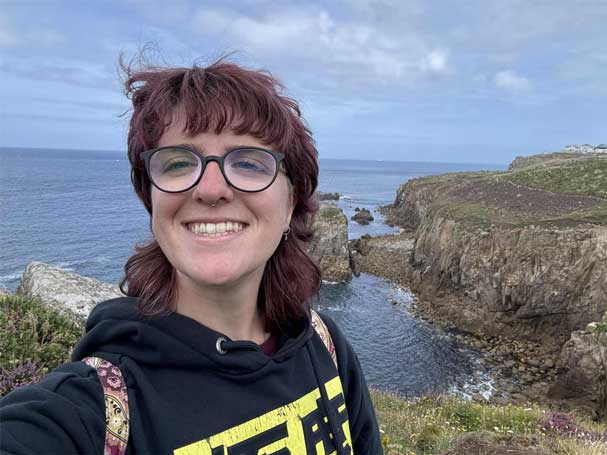
Ellen Gibson taking a selfie near a coastal cliff, wearing glasses and a black hoodie. The background shows rocky cliffs, grass, and the ocean.
  • Name: Ellen Gibson
  • Born: 26 June 2002
  • Age at Conviction: 24
  • Last Known Address: Ropery Close, Kilham, Driffield YO25 4SZ
  • Occupation: Former professional dog walker
  • Previous Convictions: None known
  • Additional Information:
    • Changed plea to guilty at Bodmin Magistrates Court
    • Subject to mental‑health treatment requirement
    • Co‑offender: Jordan Wood (sentenced August 2026)

Incident Details

Between December 2024 and April 2025, Gibson was responsible for Chance and Casper while living at Trekenning Tourist Park, Newquay. During this period:

Chance (Labrador‑type dog)

Close-up of Chance’s face during a veterinary exam. His eye is red and swollen, with small puncture-like marks near the eyelid. Hands gently hold his head still.
A close view of Chance’s ear being lifted for examination. Small dark marks are visible on the outer ear, and he is wearing a red harness and blue collar.
  • Sustained multiple traumatic head, throat, and spinal injuries over several months
  • Whiskers burned off
  • Suffered repeated blunt‑force trauma
  • Gibson failed to obtain prompt veterinary treatment for severe head injuries
  • Seized by police following vet concerns
  • Despite weeks of RSPCA care, Chance had undetected internal injuries including:
    • Crushed trachea
    • Fractured hyoid bone
  • His trachea collapsed while running in a field, causing respiratory failure and death

Casper (cat)

  • Acquired by Gibson after Chance’s seizure, despite RSPCA involvement
  • Plan was in place to remove him for safety
  • Gibson posted online that Casper had died before removal could occur
  • RSPCA intercepted his body prior to cremation
  • Post‑mortem revealed:
    • Catastrophic chest trauma
    • Multiple rib fractures across three timelines
    • Severe head injuries
    • Blindness
    • Organ damage
  • Injuries consistent with prolonged, repetitive violence
  • Died as a result of inflicted trauma

Animal Victims

Chance

  • Species: Dog
  • Breed Type: Labrador‑type
  • Sex: Unknown
  • Age: Unknown
  • Injuries: Multiple traumatic head, throat, and spinal injuries; crushed trachea; fractured hyoid bone; burned whiskers
  • Fate: Died from respiratory collapse following undetected internal injuries

Casper

  • Species: Cat
  • Sex: Male
  • Age: Unknown
  • Injuries: Catastrophic chest trauma; multiple rib fractures across three timelines; severe head injuries; blindness; organ damage
  • Fate: Died from inflicted injuries
  • Photos: ✘ None available

Sentence

Court: Bodmin Magistrates Court
Date: 24 September 2026

Penalty:

  • 23‑week prison sentence, suspended for two years
  • 15‑year ban on keeping animals (expires September 2041)
  • Mental‑health treatment requirement
  • £1,000 costs
  • £154 surcharge

    Mitigation:
  • Guilty plea
  • Mental‑health factors considered by the court

RSPCA Statement

RSPCA Inspector Jack Alderson said:

“The cruelty inflicted upon innocent animals like Chance and Casper is an unforgivable betrayal of trust. Every living creature deserves a life free from suffering and filled with compassion.”

Linked Cases

This case is directly linked to the conviction of Jordan Wood, who was jailed for 18 months and banned for life for inflicting the violence that caused Chance and Casper’s deaths.

Voice
Companion Life

Shipley, West Yorkshire: Henry Brewer

A middle‑aged man standing outdoors, wearing casual clothing, looking directly at the camera. Background shows part of a caravan site.
Serial equine abuser Henry Brewer – responsible for repeated neglect across multiple sites in Baildon and Esholt, including the collapsed foal found in 2023.

Case Summary

Serial equine abuser Henry Brewer of the Esholt Lane Caravan Site, Baildon, Shipley, left a nine‑month‑old foal collapsed in a filthy, squalid stable with a body condition score of 1/5.

Brewer was previously convicted in November 2017 for equine neglect and has now lost his appeal against seven further animal welfare convictions relating to 18 horses kept across three sites in Baildon and Esholt.

Underweight horse standing inside a barren stable block with no bedding and visible signs of neglect.

Brewer insisted his horses were “fine” despite repeated warnings, notices, and veterinary advice.

Officers found limited water, insufficient hay, poor body condition, and ongoing welfare failures across multiple visits.

Offender Overview

Name: Henry Brewer
Born: 18 September 1969
Age at Conviction: 56
Last Known Address: Esholt Lane Caravan Site Esholt Lane Baildon Shipley BD17 7RJ
Occupation: Unemployed / Traveller
Previous Convictions:

  • November 2017 — Causing unnecessary suffering to horses (UKACF case file available) Additional Information:
  • Known to authorities for long‑term equine neglect
  • Horses kept across multiple sites: Old Hollins Hill, Park Lane (Baildon), and Esholt
  • Serial non‑compliance with RSPCA advice and improvement notices

Incident Details

The RSPCA investigation began in January 2023 after concerns were raised about horses in Brewer’s care. Officers found limited water, insufficient hay, and poor body condition, issuing notices for improvement.

Underweight horse standing alone in a field, showing visible signs of neglect and poor body condition.

On 18 January 2023, officers attended Old Hollins Hill and Park Lane with police and a vet. Three underweight horses — including a young foal — were removed due to immediate welfare concerns. Follow‑up visits found continuing issues and a lack of forage.

On 6 March 2023, officers attended Brewer’s Esholt site, where a nine‑month‑old skewbald colt was found collapsed in a stable with a body condition score of 1/5. The stable had no bedding, and the floor was uneven brick and concrete. Police removed the colt and further horses due to the severity of the neglect.

Young colt lying collapsed on the floor of a bare stable, appearing extremely weak and in poor body condition

A specialist equine vet stated: “The poor body conditions of some of the horses were very obvious to see. They were visually in varying degrees of very poor condition. The owner had been previously warned about providing supplementary forage at all times.”

Brewer told officers he believed the horses’ condition was “fine.”

Animal Victims

  • 18 horses across three sites
  • Nine‑month‑old skewbald colt found collapsed (BCS 1/5)
  • Multiple horses underweight and in poor condition
  • Four ponies euthanised due to poor health
  • Remaining horses made good progress in RSPCA care
  • Three foals born to mares already pregnant at the time of removal

Sentence

Court: Bradford Crown Court
Date: Appeal dismissed 3 September 2026

Penalty:

  • 14‑week prison sentence, suspended for 12 months
  • 10‑year disqualification from owning equines (expires September 2036)
  • 100 hours unpaid work
  • 10‑day Rehabilitation Activity Requirement
  • Ordered to pay court costs

    Mitigation: None of significance; Brewer maintained horses were “fine” despite overwhelming evidence of neglect.

RSPCA Statement

An RSPCA spokesperson said: “This was a very upsetting case for our rescuers to investigate. Seeing this number of horses, including a foal, being let down by their owner — who continued to fail to provide suitable care despite advice and notices — was frustrating and very sad.”

YorkshireLive
Telegraph & Argus


UKACF Commentary

Some offenders teach you exactly what happens when the justice system gives someone a second chance they never deserved. Henry Brewer is one of them.

And yet, despite all of this, Brewer walked out of court with no ban. No restriction. No barrier preventing him from owning horses again.

He was ordered to do unpaid work and pay costs — a sentence that meant nothing to a man who had already shown he was willing to hide suffering animals behind caravans and deny there was a problem.

Brewer even told the court he had “always kept his horses like that” and didn’t see anything wrong with it. That should have been the moment the system recognised the danger. It wasn’t.

Young foal standing in a field, tethered with a rope harness, appearing underweight and in poor condition.

When Brewer was convicted in 2017, the evidence was already overwhelming: starving foals, filthy stables, makeshift rope harnesses, hidden horses, and a level of neglect so severe that one mare, Lily, had to be euthanised.

The photos of Tom Jones, trussed up and skeletal, sparked national outrage. Juliette was found in squalor on the same travellers site. Both foals were so thin and weak that their recovery took months of specialist care.

Foal restrained with a rope inside a makeshift enclosure, with ribs visible and inadequate conditions.

The consequences of that failure arrived almost exactly as anyone familiar with equine welfare would expect.

By 2023, Brewer was once again keeping horses in appalling conditions across three separate sites. Officers found limited water, insufficient hay, and animals in visibly poor condition. Notices were issued. Advice was given. Nothing changed. Brewer insisted the horses were “fine.”

Then came the moment that defined this case: A nine‑month‑old foal, collapsed on an uneven brick floor, lying in a stable with no bedding, body condition score 1/5, barely clinging to life.

This wasn’t an accident. This wasn’t ignorance. This was a man who had already been told — by vets, by inspectors, by a court — exactly what he was doing wrong. And he simply chose to do it again.

But there is another uncomfortable truth that must be acknowledged. Even if Brewer had been banned in 2017, it is doubtful that the ban would have been meaningfully adhered to.

Brewer comes from a large, extended family network on the Esholt Lane travellers site, and during the 2016–2017 investigation it was already clear that horses moved between relatives, were hidden from inspectors, and were kept across multiple plots and fields. In cases like Brewer’s, bans only work when the offender respects the law — and Brewer has never shown any willingness to do so.

He hid horses. He denied obvious suffering. He insisted emaciated animals were “fine.”

With that mindset, a ban in 2017 would almost certainly have been circumvented through informal transfers of ownership within the family, leaving the horses in the same environment and under the same practical control.

The tragedy is that a ban might have made it easier for authorities to intervene earlier, but it would not have prevented the suffering entirely.

A middle‑aged man standing outdoors, wearing casual clothing, looking directly at the camera while holding a young child.

Brewer’s behaviour — hiding horses, ignoring notices, denying reality — shows a pattern of deliberate evasion that goes far beyond simple neglect.

The 2026 conviction finally imposes a 10‑year equine ban, but it comes nearly a decade too late, and only after more horses suffered, more died, and a foal was found collapsed on bare brick.

This is what happens when the system underestimates repeat offenders. This is what happens when courts fail to impose bans on individuals who have already demonstrated a pattern of cruelty. This is what happens when warnings, notices, and advice are given to someone who has no intention of changing.

Brewer’s history was written in suffering long before this conviction. The signs were there. The warnings were there. The evidence was there.

The ban should have been there too.

UKACF exists because of cases like this — cases where animals pay the price for human failure, institutional hesitation, and judicial leniency. Brewer’s horses deserved better in 2017. They deserved better in 2023. They deserve better now.

And their suffering will be documented, remembered, and used to demand better protection for the next animals who cannot speak for themselves.

Stockton-on-Tees, County Durham: Connor Bradshaw

A formal police mugshot of wildlife killer Connor John Bradshaw, wearing glasses and a dark athletic shirt, facing the camera against a plain background.
Police mugshot of Connor John Bradshaw, taken during the wildlife crime investigation.

Case Summary

Connor John Bradshaw used his dogs to hunt and harm wildlife, sharing images of dead deer and hares on multiple social media platforms. Intelligence supplied by Naturewatch Foundation led to a joint investigation with Cleveland Police, resulting in a prison sentence and a long-term dog ban.

Offender Overview

Name: Connor John Bradshaw
Born: 8 October 1998
Age at Conviction: 27
Last Known Address: Roseworth area, Stockton‑on‑Tees TS19 (later HMP Holme House)
Occupation: Unknown
Previous Convictions: Not reported
Additional Information: Habitual wildlife offender; used Facebook, Instagram and TikTok to display dead animals and glorify dog‑led hunting behaviour.

Incident Details

Bradshaw posted photographs and videos showing dead deer and hares, with his dogs standing over the bodies. In one disturbing post, he joked about “playing tug of war with a deer” with his dog.

Connor John Bradshaw standing in a gym wearing an orange athletic shirt and glasses, with weight benches and gym equipment visible in the background.

In February, Cleveland Police received detailed intelligence from Naturewatch Foundation, who had been monitoring Bradshaw’s online activity. This information prompted Stockton’s Neighbourhood Policing Team (NPT) to question Bradshaw, leading to charges for:

  • Six counts of hunting a wild mammal with a dog
  • Causing unnecessary suffering to a protected animal

Bradshaw later provided his address as HMP Holme House.

Sentence

Court: Teesside Magistrates’ Court
Date: 11 September 2026

Penalty:

  • 12 months’ imprisonment
  • 15‑year disqualification from keeping dogs (expires September 2041)
  • Ban expiry: Bradshaw cannot appeal for at least 10 years

    Mitigation: None reported

Agency Statements

Cleveland Police – NPT Sergeant Mitch Baldwin

Bradshaw showed “a shocking amount of disregard for the welfare of animals” and repeatedly caused “unfathomable suffering to wildlife”.

Connor John Bradshaw indoors wearing a black winter jacket with a fur‑lined hood, glasses, black athletic trousers, and a Valentino crossbody bag.

He praised the “fantastic partnership work” between the neighbourhood team and Naturewatch Foundation, highlighting how vital collaborative investigations are in tackling wildlife crime.

Naturewatch Foundation – Wildlife Crime Campaign Manager Jim Clark

Clark stated that offenders who persecute wildlife “should expect to feel the full force of the law”.

He congratulated the investigating officer for securing a strong result and emphasised the importance of partnership work in protecting wildlife for the future.

TeessideLive
Northern Echo

Antrim, County Antrim: Aleshia McLaverty & Jason Gallagher

Two adults standing outside a building, each holding a child whose face is pixelated. Both adults are dressed in casual formal clothing.
Serial animal abuser Aleshia McLaverty with boyfriend Jason Gallagher — photographed together years before a terrier was found starving, dehydrated and living in squalor inside their home.

Case Summary

In September 2026, Aleshia McLaverty — previously convicted in 2015 for abandoning a five‑month‑old puppy whose starved, maggot‑infested body was found hanging from blinds — returned to court after another dog was discovered living in filthy, faeces‑strewn conditions with no access to water and a body condition score of 1/5.

A small dog with light brown fur standing on a dirty carpet covered in debris and torn material. A stained mattress is visible in the background.
The terrier-cross inside the property — surrounded by debris, filth and torn material. Officers confirmed he had no access to water.

The terrier‑cross, severely underweight at 6.9kg, was seized by officers from Antrim and Newtownabbey Borough Council and gained more than a kilo shortly afterwards.

Deputy District Judge Austin Kennedy described the room the dog was kept in as “quite simply, appalling” and the treatment of the animal as “disgraceful.”

McLaverty and co‑defendant Jason Gallagher pleaded guilty to dog welfare offences.

Offender Overview

Aleshia Frances McLaverty

McLaverty standing inside a church, while holding a child with a pixelated face. Candles and floral arrangements are visible behind them.
  • Born: 10 January 1992
  • Age at 2026 Conviction: 34
  • Last Known Address: Islandbawn Drive, Antrim BT41 1JE
  • Occupation: Unknown
  • Previous Convictions:
    • 2015: Convicted of animal cruelty after abandoning puppy Sam, who died of dehydration and starvation; found hanging from blind cords.
    • Received a 2‑month suspended sentence and 5‑year ban (expired 2020).
  • Additional Information: Reoffended within six years of ban expiry; repeated pattern of neglect involving starvation, dehydration, and confinement in filthy conditions.

Jason Gallagher

  • Address: Islandbawn Drive, Antrim BT41 1JE
  • Offending Role: Failed to ensure the terrier’s welfare; co‑resident at the property.

Incident Details

Police reported concerns after seeing a dog living in dirty conditions and appearing underweight. Council Animal Welfare Officers attended the property the same day and found:

  • A wheaten‑coloured terrier‑cross, approx. one year old
  • Severely underweight at 6.9kg
  • Body condition score 1/5
  • Overgrown nails
  • Bedding and floor strewn with faeces
  • No access to water
  • Property had been superficially cleaned before officers arrived, but police body‑worn footage showed the true conditions
A cluttered, dirty bedroom with rubbish, food containers and debris scattered across the floor. A bare mattress sits against the wall and the room appears severely neglected.
The squalid room where the terrier was kept — faeces, rubbish, food waste and a bare mattress. Officers said the conditions were “appalling”.

The Council vet certified the dog as suffering due to malnutrition, inadequate environment, and unsanitary conditions.

A small wet dog standing in a stainless steel sink while two people wash him. The dog wears a red collar and looks alert.
The terrier-cross was underweight, dehydrated, and suffering, but finally safe.

After seizure, the dog gained over a kilo in a short period and has since been successfully rehomed.

Sentence

Antrim Magistrates’ Court — 11 September 2026

Jason Gallagher

  • 2‑month custodial sentence, suspended for 2 years
  • 5‑year disqualification from owning/keeping animals (expires September 2031)
  • £300 fine
  • £250 legal costs
  • £45 court costs
  • £150 veterinary costs

Aleshia McLaverty

  • 5‑month custodial sentence, suspended for 2 years
  • 5‑year disqualification from owning/keeping animals (expires September 2031)
  • £500 fine
  • £250 legal costs
  • £45 court costs
  • £150 veterinary costs

Mitigation: Guilty pleas

Judge’s Remarks: Offences described as “disgraceful”; photographs showed the dog must have been kept in the room for “quite some time.”

Council Statement

Antrim and Newtownabbey Borough Council emphasised their commitment to rigorous enforcement and stated they hoped the case would serve as a warning to anyone who fails to care for animals.

Antrim Guardian


UKACF Commentary

What was the point of issuing another five‑year ban when Aleshia McLaverty has already proven — twice — that she is incapable of caring for an animal?

An emaciated black dog lying deceased on a concrete surface, wearing a collar. A pair of human legs is visible in the background.
Sam, the five‑month‑old puppy from the 2015 case. Starved, dehydrated, and found dead hanging from blind cords. This is the cruelty McLaverty was already capable of.

The 2015 case wasn’t a warning; it was a blueprint. Sam died alone, starving, tangled in blinds, in conditions described as “the worst photos ever seen.”

And yet, once her ban expired, McLaverty went straight back to the same pattern: starvation, dehydration, confinement, filth.

Serial animal abuser Aleshia McLaverty from Antrim, Northern Ireland.

The only difference this time was luck. Luck that the terrier was found. Luck that police body‑worn footage captured the real conditions before the property was cleaned. Luck that he didn’t die trying to escape, the way Sam did.

A suspended sentence and five-year ban in 2015 didn’t protect Sam. The same ‘punishment’ in 2026 won’t protect the next dog either.