Tag Archives: offender background – serial animal abuser

Gloucester, Gloucestershire: Becky Dawson (aka Lizzie Scarrott)

CONVICTED (2026) | Becky Dawson (also known as Lizzie Beth Scarrott), born 4 November 1986, of Longney Road, Tuffley, Gloucester – sold two severely emaciated kittens who died shortly after purchase

Gloucester animal abuser Becky Dawson is shown posing for a social media photograph. Dawson, also known as Lizzie Beth Scarrott, was convicted in 2026 after two severely emaciated kittens died shortly after being sold.

Dawson/Scarrott, who has a long history of allegations concerning the sale of sick kittens, has finally been convicted of an animal welfare offence after two desperately unwell kittens died within days of being sold to a member of the public.

She sold two young kittens online to a buyer who became concerned about their condition almost immediately. Just 48 hours later the new owner sought urgent veterinary treatment.

Animal abuser Becky Dawson's victim is shown as a severely underweight black kitten being supported by a gloved hand during veterinary examination. The kitten appears weak and emaciated shortly before being euthanised on welfare grounds.
One of the kittens sold by Dawson/Scarrott. Veterinary evidence described the kitten as suffering from severe malnutrition and emaciation. Both kittens died within days of being sold.

When the veterinary practice opened the carrier, a small ginger kitten was already dead. A second black kitten had collapsed and was found to be suffering from critical illness, profound emaciation and respiratory distress. Due to the kitten’s extremely poor prognosis and severe suffering, the decision was taken to euthanise the animal on welfare grounds.

A veterinary expert told the court that both kittens were approximately six weeks old and should not have been separated from their mother, particularly given their condition. The vet concluded that the kittens were suffering from severe malnutrition and that good veterinary and husbandry practices had not been followed.

The expert further noted that the kittens were dramatically underweight. Although reported as being around eight weeks old, post-mortem findings indicated they were far smaller than expected, with body weights falling below the published range for some kittens as young as two weeks of age.

Gloucester animal abuser Becky Dawson is shown posing for a social media photograph. Dawson, also known as Lizzie Beth Scarrott, was convicted in 2026 after two severely emaciated kittens died shortly after being sold.

The court heard that Dawson, who has family links to the travelling/show-people community, sold animals online using a variety of names and aliases. She pleaded guilty to causing unnecessary suffering to the black kitten following an investigation by the RSPCA.

The conviction is particularly notable because allegations concerning Dawson’s kitten-selling activities have circulated for many years. In 2018, a BBC Watchdog investigation linked her to numerous sick kittens sold through online advertisements under various names. That investigation featured complaints from heartbroken owners whose newly purchased pets had become seriously ill or died shortly after sale.

Despite the national exposure, concerns continued to be raised by buyers and animal welfare campaigners over subsequent years. The 2026 prosecution ultimately arose from the deaths of the two kittens sold from Dawson’s care.

During the proceedings Dawson stated that she had “a lot going on at the time, including mental health issues.”


Sentence

Court: Cheltenham Magistrates’ Court
Date: 19 October 2026
Penalty: 20 weeks’ imprisonment, suspended for two years; 10-year disqualification order preventing her from keeping any animals except dogs; prohibited from breeding or selling any animal; ordered to pay £900 costs and compensation to the purchaser of the kittens.
Mitigation: “mental health issues.”

Ban Expiry: 19 October 2036 (subject to any successful application for variation after five years)


RSPCA Statement

RSPCA Inspector Jack Alderson said: “Anyone caring for animals should prioritise their health and welfare. Sadly these kittens didn’t get the right care during the start of their lives and lost their lives as a result.

“This case shows why it is so important that anyone wanting to welcome a new kitten into their life needs to be careful when choosing him or her.

“There are many unsuitable breeders out there, and it is vital that new owners take the time to make sure their new pet has not come from one of them.”

GloucestershireLive


UKACF Commentary

This conviction will come as little surprise to those who followed the controversy surrounding Dawson’s animal-selling activities over the past decade. Concerns were repeatedly raised by buyers, campaigners and journalists, yet the practice of selling animals appears to have continued for years before criminal proceedings were finally brought.

Gloucester animal abuser Becky Dawson is shown posing for a social media photograph. Dawson, also known as Lizzie Beth Scarrott, was convicted in 2026 after two severely emaciated kittens died shortly after being sold.

The veterinary evidence in this case was particularly disturbing. The kittens were described as so severely underweight that they weighed less than would be expected of some two-week-old kittens, despite being several weeks older. One was already dead when presented to the veterinary practice, while the other was beyond saving.

UKACF believes the only meaningful ban for serious animal cruelty offenders is a lifetime prohibition covering all animals. We have never understood the logic behind allowing someone convicted of causing suffering to one species to continue keeping another.

In this case, Dawson received a 10-year ban affecting most animals but remains permitted to keep dogs. Given the deaths of two kittens, the severe neglect established by the court and the longstanding concerns that have surrounded her animal-selling activities, we believe a lifetime ban on owning, breeding, selling or otherwise dealing in any animal would have provided far greater protection for animal welfare.

Newport, Isle of Wight: Trevor Rand

Trevor John Rand, who received a 15-year ban after admitting neglect offences involving two mares, TikTok and Twisty.
Trevor John Rand received a 15-year ban after admitting neglect offences involving two mares, TikTok and Twisty.

Trevor John Rand, 62, director of Little Fairlee Farm in Newport, avoided immediate imprisonment after admitting four animal welfare offences relating to two mares, TikTok and Twisty. The offences took place between 23 July and 31 October 2024 and followed months of neglect that ultimately led to both horses being euthanised.

Rand had repeatedly denied wrongdoing during earlier court appearances before eventually changing his pleas to guilty.

Trevor John Rand's mare TikTok is shown in poor physical condition inside a stable before she was euthanised following a welfare collapse.
TikTok collapsed in her stable and was later euthanised after being unable to support her own weight.

The court heard he failed to investigate and address the horses’ deteriorating body condition, failed to treat conditions including rain scald and mud fever, and failed to seek veterinary treatment for leg deformities and swelling.

Concerns about the horses had previously been raised by both a veterinary surgeon and Hampshire & Isle of Wight Fire and Rescue Service, which attended the property on two occasions within ten days.

Twisty's condition was described as skeletal, with visible ribs, muscle wastage, lice infestation and no water in her stable.
Twisty’s condition was described as skeletal, with visible ribs, muscle wastage, lice infestation and no water in her stable.

On 24 October 2024, Rand’s daughter contacted a vet after becoming concerned about TikTok, who had collapsed in her stable. Despite receiving pain relief and repeated attempts to help her stand, TikTok was unable to bear her own weight and was euthanised to prevent further suffering.

Six days later, RSPCA officers, a specialist equine vet and police attended Little Fairlee Farm using their powers to enter the premises. Inspector Hannah Nixon described being shocked by Twisty’s condition. Every rib was visible, the mare had virtually no muscle mass over her hindquarters and appeared skeletal.

Twisty's condition was described as skeletal, with visible ribs, muscle wastage, lice infestation and no water in her stable.

A veterinary examination found Twisty had a body condition score of just 0.5 out of 5. She was suffering from lice infestation, widespread rain scald, severely overgrown and unevenly worn hooves, and there was no water available in her stable. The examining vet stated that Twisty’s condition would have been obvious even to someone with no equine knowledge and that her severe weight loss had developed over several months due to inadequate nutrition.

Both TikTok and Twisty were ultimately euthanised. The court heard that Rand initially refused to consent to this course of action.

Prosecuting on behalf of the RSPCA, Sarah Wheadon described Rand as a “high-risk offender” who had failed to cooperate with the investigation. The court also heard that this was not the first time concerns had been raised about animals in his care.

In a separate case, two other horses belonging to Rand, Dave and Reggie, were permanently removed after a court found they were suffering. Dave, an elderly horse, was found in very poor body condition, infested with lice, covered in faeces and urine, and suffering health issues linked to malnutrition and inadequate dental care. Reggie, described by Rand as his prized £250,000 horse, was also later surrendered to the RSPCA.

Twisty's condition was described as skeletal, with visible ribs, muscle wastage, lice infestation and no water in her stable.

Rand told magistrates that he loved his animals and did not wish to ill-treat them. He claimed that Reggie had mistakenly been placed in a field where he chased other horses, contributing to their deterioration. Magistrates rejected the seriousness of those explanations, describing the treatment of TikTok and Twisty as “appalling” and “disgusting”.

At the time of sentencing, Rand still had six horses at Little Fairlee Farm. The RSPCA indicated it would seek the removal of those animals following the conclusion of the appeal process.


Sentence

Court: Isle of Wight Magistrates’ Court
Date: 20 October 2026
Penalty: 18 weeks’ imprisonment, suspended for 18 months
Disqualification: 15-year ban on keeping, dealing in or transporting horses, ponies and donkeys (expires October 2041)
Costs and Penalties: £2,024
Mitigation: Claimed he loved his animals and did not intend to ill-treat them; blamed deterioration partly on horse management issues involving another horse.
Additional Information: RSPCA described him as a “high-risk offender” and sought removal of the six horses remaining in his care.


RSPCA Statement

RSPCA Inspector Hannah Nixon said she was shocked by Twisty’s condition, describing a horse whose ribs were clearly visible and who had virtually no muscle mass. Veterinary evidence concluded that the mare’s severe weight loss and poor condition would have been obvious even to a person with no knowledge of horses and had developed over several months as a result of inadequate nutrition and care.

Prosecutor Sarah Wheadon told the court that Rand had failed to cooperate with the RSPCA investigation and described him as a high-risk offender.


At a Glance

Offender: Trevor John Rand
Born: January 1964
Age at Conviction: 62
Last Known Address: Little Fairlee Farm, Mews Lane, Newport, Isle of Wight, PO30 2LB
Occupation: Director, Little Fairlee Farm
Animal Victims: TikTok and Twisty (mares)
Animal Fate: Both euthanised
Key Findings: Severe emaciation, rain scald, mud fever, lice infestation, overgrown hooves, lack of water, failure to obtain veterinary treatment
Body Condition Score: Twisty scored 0.5/5
Previous Animal Welfare History: Convicted in 2009 for failing to comply with cattle ear-tagging regulations and banned from keeping cattle for 10 years; horses Dave and Reggie permanently removed in separate welfare proceedings
Other Animals in Care: Six horses remained at Little Fairlee Farm at the time of sentencing
Ban Expiry: October 2041

Isle of Wight County Press


UKACF Commentary

The Trevor Rand case raises serious questions about how many opportunities were missed before intervention finally took place. TikTok and Twisty were not suffering from a sudden illness or an unforeseen emergency. Veterinary evidence showed that Twisty’s severe weight loss had developed over many months and was so obvious that even someone with no knowledge of horses should have recognised that something was badly wrong.

Particularly concerning is the fact that this was not Rand’s first encounter with animal welfare authorities. The court heard he had previously been banned from keeping cattle, while separate proceedings had already resulted in horses Dave and Reggie being removed from his care after they were found to be suffering. Despite that history, further horses remained in his possession and two more mares ultimately had to be euthanised.

Rand told the court that he loved his animals and did not want to ill-treat them. However, cases such as this demonstrate that affection alone is not enough.

Animal ownership carries a legal responsibility to provide adequate nutrition, veterinary treatment, clean water and basic husbandry. When those obligations are ignored over a prolonged period, the consequences can be fatal.

The fact that six horses remained at Little Fairlee Farm at the time of sentencing is likely to be of particular concern.

The RSPCA’s intention to seek their removal reflects the seriousness of the welfare failings identified by investigators and the continuing risk to any animals left in Rand’s care.

Great Yarmouth, Norfolk, Steven Woolger

animal abuser Steven Woolger is shown standing in front of a glass door holding a blue rectangular object, wearing glasses and a black hoodie with red text, with trees and a building reflected behind him.

Former boar‑stud worker Steven Woolger, 48, was caught on covert camera repeatedly abusing pigs at the Innovis semen collection centre in Burgh Castle, Norfolk.

The footage, gathered by Animal Justice Project between May and September 2024, showed Woolger striking pigs with a pitchfork, kicking them, and hitting them forcefully with a plastic pipe. He had worked at the facility since 2013 and was responsible for the daily handling of boars used for semen collection.

Steven Woolger is shown standing in a straw‑covered boar housing pen holding a stick while several dark‑coloured boars stand close to him near concrete partition walls.

Norfolk County Council’s Trading Standards team brought the case after the footage was released publicly.

Woolger pleaded guilty to eight animal welfare offences, including causing unnecessary suffering and failing to protect pigs from pain, injury and distress.

Steven Woolger is shown standing in a straw‑covered boar housing pen holding a stick while several dark‑coloured boars stand close to him near concrete partition walls.

The court heard that he had raised concerns about equipment and gate issues prior to the incidents, and his defence claimed “mental‑health difficulties” and “workplace stress”. He had no previous convictions.

District Judge Matthew Bone described the abuse as deliberate actions committed on more than one occasion, stating that Woolger had completely failed in his duty to safeguard the animals in his care. Woolger has since lost his job and is unemployed.

Sentence

  • 17‑week prison sentence suspended for 18 months
  • 10‑year ban on involvement in the care or transportation of animals
  • £1,654 fine

At a Glance

  • Offender: Steven Woolger, born c. 1978
  • Location: Burgh Castle / Great Yarmouth, Norfolk
  • Victims: Boars used for semen collection
  • Offences: Eight counts of animal welfare violations
  • Ban Expiry: October 2036
  • Investigation: Animal Justice Project → Norfolk Trading Standards

BBC News

Chartham Hatch, Kent: David Stanbury & Aylesham, Kent: Jack Stanbury

Animal abuser Jack Stanbury is shown on the left wearing a camouflage jacket outdoors beneath a cloudy sky, with another person’s arm resting on his shoulder. On the right, animal abuser David Stanbury appears in formal attire, wearing a white shirt and dark vest, standing outdoors with greenery blurred behind him.
Jack Stanbury and David Stanbury, the father‑and‑son wildlife persecutors whose phones revealed brutal hunts, trophy videos and the suffering of both wild animals and dogs.

This case concerns father and son David and Jack Stanbury, whose long‑running persecution of wildlife was exposed after David was arrested at a wild boar hunt in the Forest of Dean on New Year’s Eve 2024.

Animal abuser Jack Stanbury is shown outdoors at night wearing camouflage clothing, holding the head of a large deer lying on the ground with visible blood at the neck. Artificial light illuminates the scene against a dark background.

When police seized his phone, they uncovered a vast archive of trophy videos, messages and images documenting the killing of deer, foxes and badgers, along with disturbing footage of dogs being mistreated, intimidated and forced into violent encounters.

Further devices seized during warrants in October 2025 revealed even more offences, implicating both men in sustained cruelty.

One of the dogs seen in the footage — a lurcher called Bear — was found at David’s home and removed to safety.

David Stanbury, born around 1972, lives at Denstead Lane in Chartham Hatch, Canterbury, where he runs an upmarket Airbnb lodge called Canterbury Cabin with his much younger Latvian wife, Viktorija.

The couple’s online presence projected a polished, idyllic lifestyle, but the content recovered from David’s phone told a very different story.

Animal abuser David Stanbury is shown outdoors in daylight, wearing a white collared shirt and dark vest, with greenery blurred behind him. Another person’s arm and hair are partly visible close to him, suggesting a candid moment.

He had previously been charged in June 2025 alongside Thomas Bishop, born c. 1992, of Grove Close in Pontefract, West Yorkshire, after a dead boar was found in the Forest of Dean. In that earlier case, David faced allegations of hunting a wild mammal with dogs, possession of bladed articles and causing unnecessary suffering to a protected animal. Bishop pleaded guilty and was fined but Stanbury denied the charges. The outcome of that case against him is not known.

Animal abusers David and Jack Stanbury are shown at the father's wedding ceremony. Both are wearing dark suits.

Jack Stanbury, born around 1999 and living in Vale View Road, Aylesham, Canterbury, was drawn into the investigation when messages and videos on his father’s devices showed him participating in the hunting and abuse.

Although younger, Jack’s involvement was not peripheral; he was actively engaged in the persecution and mistreatment of both wildlife and dogs.

Animal abuser Jack Stanbury is shown seated in the driver’s seat of a vehicle, wearing a white dress shirt and dark vest. The car interior surrounds him, with the window and door frame visible, capturing a composed moment in formal attire.

Judge Fowler refused to allow the videos to be played in court due to their disturbing nature, relying instead on detailed descriptions of the content.

When warrants were executed at both men’s addresses, officers found Bear, the lurcher seen in the footage, living in poor conditions. He was seized and taken into RSPCA care.

Additional phones recovered during the searches revealed further offences, demonstrating that the cruelty was not isolated but part of a sustained pattern.

Sentencing

On 25 September 2026, both men were sentenced at Cheltenham Magistrates’ Court.

David Stanbury received a three‑year prison sentence, suspended for three years, along with 100 hours of unpaid work, 15 Rehabilitation Activity Requirement days, a nine‑month curfew between 9pm and 5am, and £5,000 in costs.

Jack Stanbury received an 18‑month prison sentence, suspended for two years, 100 hours of unpaid work, a six‑month curfew between 9pm and 5am, and £1,000 in costs.

Both men were banned from keeping animals for life.

In mitigation, the court heard claims that they were remorseful and had distanced themselves from the hunting community.

Statement by Investigators

RSPCA investigator Michelle Hare described the content found on David’s phone as revealing the true scale of the cruelty. She spoke of shocking videos showing wildlife being brutally killed, heartbreaking trophy images, and messages about hunting with dogs, highlighting the suffering inflicted on both wild animals and the dogs used in the crimes.

Police Sergeant Ross Haybourne of Kent Police’s Rural Task Force emphasised the importance of collaboration with the RSPCA, confirming that Bear was seized and taken to safety and stating that the force remains committed to bringing rural offenders to justice.

At a Glance

Offenders: David Stanbury (born circa 1972), Jack Stanbury (born circa 1999)
Addresses: Denstead Lane, Chartham Hatch, Canterbury CT4 7NL; Vale View Road, Aylesham, Canterbury CT3 3DD
Previous Case: 2025 Forest of Dean boar case involving David Stanbury and Thomas Bishop (outcome unknown)
Victims: Deer, foxes, badgers, and multiple dogs including Bear
Key Evidence: Trophy videos, messages, images, and footage of dogs being mistreated
Investigation: Gloucestershire Police, Kent Police Rural Task Force, RSPCA Special Operations Unit
Outcome: Lifetime animal bans for both men

Dogs Today


UKACF Commentary

What is most striking about David Stanbury is the gulf between the life he performs online and the cruelty he chooses in reality. His social media paints a picture of a blissful, upmarket lifestyle shared with his much younger wife at their Airbnb accommodation, Canterbury Cabin. But cruelty of this magnitude never stays neatly contained in a field or a forest. It speaks to a deeper absence of empathy, control and respect for life.

Men who revel in violence toward animals often wear extraordinarily convincing masks — charming, confident, wholesome, successful. Behind closed doors, those masks slip.

A man who laughs at suffering, who teaches cruelty to his own son, who treats life as disposable, does not transform into a gentle, safe partner at home.

Social media can present a fairy‑tale marriage, but the reality for women tied to men like this is often far more complex, shaped by power imbalance, image‑management and a version of him that exists only for the camera.

Bexley, Greater London: Bartosz Poklek

Head‑and‑shoulders police mugshot of Bartosz Poklek against a plain light‑coloured background, looking directly at the camera with a neutral expression.
Polish national Bartosz Poklek was convicted in London for running an international monkey‑torture network.

Bartosz Poklek, a 30‑year‑old Polish national living in Bexley, south‑east London, was convicted at Woolwich Crown Court after admitting to running a large‑scale international monkey‑torture network between June 2023 and September 2025.

He pleaded guilty to commissioning, scripting and distributing videos depicting the torture and killing of baby monkeys in South‑East Asia, as well as publishing obscene videos for gain, possessing indecent images of children, and possessing ketamine.

Judge Christopher Grout described the case as the worst example of animal abuse he had encountered and imposed a sentence of three years and three months, of which Poklek will serve roughly one third under the Sentencing Act 2026.

Bartosz Poklek was not an outlier but a central node in the Global Monkey Torture Network — a sprawling, transnational web of online zoosadists whose appetite for cruelty has pulled in offenders from Scotland, England, and the United States.

Side‑by‑side composite image.
Left: A social‑media style portrait of Natalie Herron, facing the camera against a plain background.
Right: A police mugshot of Peter Stanley, also facing the camera.
Both images are cropped to head‑and‑shoulders format.
Police mugshot of Peter Stanley alongside a social‑media photograph of Natalie Herron. Both have convictons related to the global monkey‑torture network.
Two police mugshots shown side by side.
Left: Holly Le Gresley, facing the camera against a plain background.
Right: Adriana Orme, also facing the camera against a plain background.
Both women appear in neutral lighting with straightforward identification‑style portraits
Police mugshots of Holly Le Gresley (left) and Adriana Orme (right), both convicted for their roles in the global monkey‑torture network.

Like Natalie Herron of Airdrie, Holly Le Gresley and Adriana Orme of Worcestershire, and Peter Stanley of Liverpool, Poklek belonged to the same grotesque digital underworld: a community that fetishised the suffering of baby monkeys and treated torture as entertainment, currency, and social capital.

Poklek’s role was unusually active. Operating from a rented room in Bexley, he commissioned, scripted, distributed and profited from videos depicting the torture and killing of infant monkeys in South‑East Asia. He was not merely a consumer but a facilitator — a man who wrote instructions for how the animals should be harmed, who liaised with perpetrators abroad, and who curated a vast personal archive of abuse.


Saving Mini: Inside the global network torturing baby monkeys – BBC World Service

Within the online groups he frequented, he was treated with reverence and known by titles such as “The General” and “The Boss”, a status that seemed to compensate for the reality of his life: an isolated, drug‑dependent loner living in an HMO.

The footage he collected and circulated was sold for hundreds of pounds to members of Telegram and Discord groups that numbered in the hundreds.

These groups were not fringe corners of the internet but thriving, international communities whose members discussed torture with chilling casualness. Investigators described conversations in which participants moved seamlessly from planning abuse to chatting about gardening or family errands. One British woman ended a discussion about torture by announcing she needed to pick up her grandchildren.

Animal abuser Bartosz Poklek is shown standing outdoors in daylight, with brick houses and chimneys behind him. A wooden fence runs along the right side of the scene. The sky is partly cloudy, and bright sunlight from behind creates a soft backlit effect.

Poklek’s offending was uncovered after he attempted to obtain court documents from a related monkey‑torture case in the United States — a move that drew the attention of Homeland Security Investigations and triggered a joint operation involving the National Wildlife Crime Unit, the Metropolitan Police, West Mercia Police, and US federal agencies. When officers examined his devices, they found around 3,000 videos of extreme physical abuse, alongside indecent images of children.

Judge Christopher Grout, sentencing him at Woolwich Crown Court, described the case as the worst example of animal abuse he had encountered in his career. He noted that Poklek would serve only around a third of his three‑year‑three‑month sentence under the Sentencing Act 2026 and stated plainly that the statutory maximum for animal cruelty — currently five years — is “too low”.

The CPS called Poklek a “key cog in a vile trade” and emphasised the need to root out the enablers of online animal torture wherever they are found.

Poklek may be deported to Poland after release. Even that feels insufficient. His crimes were not impulsive acts of cruelty but sustained, organised, deliberate sadism.

The monkeys he targeted were babies: intelligent, social, sensitive animals whose suffering was turned into a commodity for an international audience of zoosadists. Poklek revelled in their pain. The law, as it stands, barely registers it.

Metadata

  • Full Name: Bartosz Poklek
  • Born: circa 1996
  • Address: Bexley, South‑East London
  • Case Location: London, England
  • Conviction Date: October 2026
  • Court: Woolwich Crown Court
  • Offence: Commissioning, scripting, distributing and profiting from videos depicting the torture and killing of baby monkeys; publishing obscene videos for gain; possession of indecent images of children; possession of ketamine
  • Animal(s): Baby monkeys (primates)
  • Outcome For Animals: Tortured and killed in commissioned videos
  • Investigating Bodies: National Wildlife Crime Unit; Metropolitan Police; West Mercia Police; US Homeland Security Investigations; US Fish and Wildlife Service
  • Sentence: 3 years 3 months imprisonment; eligible for release after serving approximately one third
  • Previous Convictions: Not publicly reported
  • Additional Notes: Revered within the monkey‑torture community; known as “The General” and “The Boss”; possessed approximately 3,000 videos of extreme abuse; attempted to obtain US court documents relating to a connected case; part of the same organised network as UKACF‑documented offenders Natalie Herron, Holly Le Gresley, Adriana Orme and Peter Stanley
  • Reporting Gaps: Exact number of animals harmed; identities of overseas perpetrators; full extent of Poklek’s communications with other UK‑based offenders

BBC News
Crown Prosecution Service
Daily Mail

Carlisle, Cumbria: Axel Read

A man in a thick grey winter coat with a fur‑lined hood stands outside a building entrance, adjusting the coat near his neck. This is Axel Read, convicted of stealing two ferrets and allowing his dogs to kill them.
Read turned up to court in a Canada Goose jacket — a brand notorious for using real fur — which feels grimly appropriate for someone who treats animals as disposable.

On 31 July 2024, Axel Shane Read, 24, broke into the back garden of neighbour Laice Cleough in Upperby, Carlisle, and stole her two rescue ferrets, Pumpkin and Latte, from their enclosure.

Two ferrets are being held up by a person’s hand. One has darker brown fur and the other is pale cream. Both have pink noses and small rounded ears. These are Pumpkin and Latte, stolen from their owner’s garden and later found dead with bite and head trauma.
Rescue ferrets Pumpkin and Latte were stolen from their enclosure and later found dead after being used as bait for dogs.

CCTV captured Read and another man at around 6:30pm shining a light into the cage before Read opened the door, reached inside, and removed both animals. The ferrets were among 25 kept by Cleough, who also cared for other rescued animals.

Both ferrets were later found dead — one dumped in a black bin, the other under a hedge. They had bite marks, body trauma, and head injuries, consistent with being used as bait for dogs.

A video shown in court depicted Read holding one of the ferrets and “trying to get one of his dogs to have a go at it”.

Judge Fanning described the act as “an act of execution and an act of sadism”, noting that the animals would have expressed a stress odour and “died in fear”.

Further footage showed Read disposing of one of the dead ferrets while saying it “stinks”, and celebrating the dogs’ involvement by telling one it was a “good boy”.

Axel Read and a second male stand indoors against a light‑coloured wall. One wears a blue Nike athletic shirt with hands clasped; the other, partly visible, wears an orange Under Armour shirt with arms crossed.

The judge said Read’s dogs were trained to kill by applying pressure to the neck. He rejected suspending the sentence, stating that doing so might lead “other young lads” to think such behaviour was acceptable.

Read denied involvement, telling the owner: “I don’t have your stinky ferrets. If I had taken your ferrets, I would have skinned them and left them outside your front door.” He also threatened to destroy her car and home. Cleough said the incident left her paranoid, scared to live in her own home, and fearful of seeing Read, whom she described as unpredictable.

Axel Read stands outdoors at night holding a dead rabbit by its hind legs and a flashlight. A black‑and‑white dog on a blue leash stands in front of him. The scene shows Read engaged in hunting with dogs.

Read was unanimously convicted by a jury of five on multiple counts of causing unnecessary suffering to a protected animal, including causing a ferret to be destroyed by a dog and causing a ferret to be taken from its protected enclosure, resulting in its death.

Sentence

Court: Carlisle Crown Court
Date: 6 October 2026
Penalty: 15 months’ imprisonment
Ban: None reported
Restraining Order: 3 years — no contact with victim; barred from entering a residential Carlisle road
Mitigation: None reported

At a Glance

  • Offender: Axel Read
  • Born: circa 2002
  • Age at Conviction: 24
  • Address: Marks Avenue, Belle Vue, Carlisle CA2
  • Occupation: Roofer
  • Previous Convictions: Not reported
  • Additional Information: Read is known locally as a wildlife persecutor; his social media accounts contain numerous images of dead animals and birds, including hunting with dogs and with a firearm
  • Animal Victims: Pumpkin & Latte (ferrets)
  • Victim Fate: Both found dead with bite wounds, body trauma, and head injuries
  • Evidence: CCTV of theft; CCTV of baiting; physical injuries; owner statement
  • Case Type: Theft; fatal animal abuse; baiting; dog‑related cruelty

BBC News
Metro
News & Star


UKACF Commentary

The killing of Pumpkin and Latte was not a moment of panic or a reckless mistake — it was a deliberate, sustained act of cruelty. The CCTV footage and witness accounts show a man who did not simply disregard animal suffering, but actively sought it out, encouraged it, and took pleasure in it. Judge Fanning’s description of the incident as “an act of execution and an act of sadism” is not rhetorical flourish; it is an accurate reflection of the behaviour captured on video.

Axel Read kneels beside a dog at night. In front of them lies a row of dead birds arranged on the ground with a rifle placed above them. The scene is lit by artificial light and shows the results of a hunting session.

Read didn’t just steal the ferrets. He handled them in ways clearly intended to maximise fear and distress. He encouraged his dogs to attack them, praised the dogs afterwards, and even mocked the dead animals while disposing of their bodies. This is cruelty carried out with intention, enjoyment, and a complete absence of empathy.

What makes this case even more disturbing is what the court did not do. Despite the sadism, despite the baiting, despite the fatal injuries, despite the clear evidence of deliberate violence, Read was not banned from keeping animals. This means that the man who fed two terrified ferrets to his dogs can legally continue owning dogs — and, crucially, can continue hunting with dogs, something he already does extensively.

His social media accounts, filled with images of dead wildlife, hunting trophies, and animals killed with dogs and firearms, show a long-standing pattern of behaviour. The ferrets were not an isolated incident; they were simply the victims caught on camera. The absence of a ban means that nothing prevents him from continuing the same activities that preceded this offence.

For the owner, the impact has been profound. Her statement describes paranoia, sickness, fear, and a loss of safety in her own home. She was left terrified of seeing Read again — and given his behaviour, her fear is entirely justified. The restraining order offers some protection, but it does not address the core issue: a man who has demonstrated sadistic violence towards animals still has legal access to animals.

This case exposes a serious gap in the system. When an offender demonstrates sadism, enjoyment of suffering, and a pattern of violent behaviour towards animals, a ban should be automatic. The fact that Read can walk out of prison and immediately resume hunting with dogs is not just a failure — it is a risk.

Pumpkin and Latte deserved better. Their deaths should have resulted in a lifetime ban. Instead, the man who killed them retains the legal right to continue the very activities that led to their suffering.

Silloth, Cumbria: Alan Lagar

Photograph of Alan Lagar, a 53‑year‑old man from Silloth, Cumbria, who was banned for life from keeping animals after police and rescuers uncovered neglected and deceased animals at his caravan
Alan Lagar, 53, from Silloth, who received a lifetime ban from keeping animals following the Cumbria Police and Kenzie’s K9s investigation.

Lagar has been banned from keeping animals for life following a disturbing investigation into the deaths and neglect of multiple animals at his home and caravan.

Images showing the conditions inside and around Alan Lagar’s caravan, including neglected animals, contaminated environments, and evidence recovered during the Cumbria Police and Kenzie’s K9s investigation.

He received a lifetime disqualification order at Workington Magistrates’ Court on 15 September 2026, after police and rescuers uncovered a series of deeply distressing scenes involving deceased animals, severely neglected pets, and hazardous living conditions.

Cumbria Police first attended Lagar’s caravan in April 2026 after concerns were reported. Officers discovered signs that animals had died both inside and outside the property.

The caravan was heavily contaminated with faeces and animal decay, and outside, the remains of animals believed to be rabbits were found. Lagar was located nearby and arrested.

The case was significantly advanced thanks to the vigilance of Kenzie’s K9 Animal Search & Rescue, who had been monitoring Lagar for two years following a previous incident in June 2024.

Images showing the conditions inside and around Alan Lagar’s caravan, including neglected animals, contaminated environments, and evidence recovered during the Cumbria Police and Kenzie’s K9s investigation.

In that earlier case, 27 dogs were rescued from a cramped two‑berth caravan in Braystones, Cumbria. Despite the severity of the conditions, no charges were brought at the time — something rescuers described as “justice never served.”

Images showing the conditions inside and around Alan Lagar’s caravan, including neglected animals, contaminated environments, and evidence recovered during the Cumbria Police and Kenzie’s K9s investigation.

Kenzie’s K9s continued to keep Lagar on their radar, monitoring publicly available information due to concerns he might acquire more animals. Their suspicions were confirmed when an anonymous social‑media post about a missing dog in Silloth was traced back to Lagar.

Images showing the conditions inside and around Alan Lagar’s caravan, including neglected animals, contaminated environments, and evidence recovered during the Cumbria Police and Kenzie’s K9s investigation.

Rescuers attended the site and documented what they could from outside the caravan, discovering hooves in a fly‑covered bag, cat wheels, litter boxes, and hutches buried under rubbish.

One hutch contained a decomposed guinea pig; another held mouldy bedding and animal fur. The caravan windows were filthy and covered in flies, and rescuers could hear an animal moving inside.

Images showing the conditions inside and around Alan Lagar’s caravan, including neglected animals, contaminated environments, and evidence recovered during the Cumbria Police and Kenzie’s K9s investigation.

Police were called and, after several hours, forced entry. Inside, officers found a deceased ferret in a filthy cat carrier and a heavily pregnant young tabby cat emerging from the debris.

Images showing the conditions inside and around Alan Lagar’s caravan, including neglected animals, contaminated environments, and evidence recovered during the Cumbria Police and Kenzie’s K9s investigation.

Meanwhile, Lagar’s car was stopped as he attempted to return to the site. Inside were six dogs crammed into two small cages in the boot, and an eight‑week‑old puppy on the passenger seat. More animals were later recovered, including additional dogs, cats, and deceased animals.

Rescuers worked alongside police, provided statements, and documented the conditions extensively. Their efforts ensured the case progressed to court.

Sentence

The case was heard at Workington Magistrates’ Court on 15 September 2026.

Lagar received:

  • 18 months’ community service
  • 18 months’ rehabilitation requirements
  • £390 fine
  • Lifetime disqualification order preventing him from:
    • Owning animals
    • Keeping animals
    • Participating in the keeping of animals
    • Being party to any arrangement allowing him to control or influence how animals are kept

The ban applies to all animals for life.

Cumbria Police publicly thanked Kenzie’s K9 Animal Search & Rescue for reporting concerns promptly and for their commitment to animal welfare.

At a Glance

  • Defendant: Alan Lagar (aged 53 at date of conviction, born c. 1973)
  • Address: Silloth, Cumbria but with links to several areas includ,ng Braystones, Maryport, Wigan, Liverpool and Warrington
  • Offence Locations: caravan sites in Braystones and later Silloth
  • Animals Involved: Dogs, cats, rabbits, guinea pig, ferret (multiple deceased animals)
  • Key Issues: Severe neglect, faeces‑soiled environment, animal remains, cramped cages, decomposed animals, pregnant cat, multiple dogs confined in small cages
  • Ban Length: Lifetime
  • Rescue Organisations: Kenzie’s K9 Animal Search & Rescue; Animal Concern Cumbria
  • Police Involvement: Cumbria Police

Cumbria Crack


UKACF Commentary

The case of Alan Lagar is not an example of chaotic animal hoarding. It is something far more deliberate, patterned and concerning. The evidence from Cumbria Police, local residents and Kenzie’s K9 Animal Search & Rescue shows a man who actively sought out vulnerable animals, concealed them, and repeatedly allowed them to suffer and die in catastrophic conditions. His behaviour is organised, intentional and persistent — and there are indications he did not act alone.

Images showing the conditions inside and around Alan Lagar’s caravan, including neglected animals, contaminated environments, and evidence recovered during the Cumbria Police and Kenzie’s K9s investigation.

Animal hoarders typically accumulate pets impulsively, often believing they are “saving” them. Their behaviour is disorganised, emotionally driven and usually centred around one species. Lagar’s behaviour is the opposite. He did not passively acquire animals — he hunted for them. According to rescuers, he “stalks Facebook for animals free to a good home and has travelled all over for them.” This is targeted acquisition, not hoarding. It shows planning, intention and a willingness to exploit people offering pets to what they believed were safe homes.

Images showing the conditions inside and around Alan Lagar’s caravan, including neglected animals, contaminated environments, and evidence recovered during the Cumbria Police and Kenzie’s K9s investigation.

His history reinforces this pattern. In 2024, 27 dogs were found living in a cramped two‑berth caravan in Braystones. Despite the severity of that situation, no charges were brought. But Lagar did not stop. He moved locations, continued monitoring social media, and resumed collecting animals. By 2026, he was again keeping multiple species — dogs, cats, rabbits, a guinea pig, a ferret — in a caravan filled with faeces, decay, rubbish and animal remains. This is not emotional attachment or disorganisation. It is indiscriminate acquisition followed by severe neglect.

The conditions discovered in 2026 show a level of concealment that goes beyond typical hoarding. Rescuers found hooves in a fly‑covered bag, buried hutches containing decomposed animals, mouldy bedding with fur, and windows so filthy they could not see inside. A heavily pregnant young cat was found living in the debris. A deceased ferret was discovered in a filthy carrier. When police stopped Lagar’s car, six dogs were crammed into two small cages in the boot, with an eight‑week‑old puppy loose on the passenger seat. More animals were later recovered.

Images showing the conditions inside and around Alan Lagar’s caravan, including neglected animals, contaminated environments, and evidence recovered during the Cumbria Police and Kenzie’s K9s investigation.

This is not someone overwhelmed by too many pets. This is someone who actively sought animals, hid them, and repeatedly allowed them to suffer. His behaviour fits the profile of what animal‑welfare criminology describes as an acquisitive neglect offender — an individual who intentionally obtains animals, often vulnerable or unwanted, and then subjects them to prolonged neglect, sometimes resulting in death. These offenders are high‑risk because their behaviour is purposeful, not accidental, and because they continue seeking animals even after intervention.

There is also emerging information suggesting Lagar may not have acted entirely alone. At least one known associate, believed to be living on a caravan site in Allonby, has been identified by rescuers as someone who may have assisted or enabled aspects of Lagar’s behaviour. While details remain limited, the presence of an accomplice reinforces the organised nature of this offending and raises further concerns about how animals were acquired, transported and concealed.

Images showing the conditions inside and around Alan Lagar’s caravan, including neglected animals, contaminated environments, and evidence recovered during the Cumbria Police and Kenzie’s K9s investigation.

The role of Kenzie’s K9 Animal Search & Rescue cannot be overstated. Their persistence, monitoring and documentation were crucial in ensuring this case reached court. They recognised the pattern early, kept watch for two years, and acted decisively when new concerns emerged. Without their vigilance — and the determination of PC Ostle and PC Pattinson — it is likely this situation would have continued unchecked.

The lifetime ban imposed by the court is not only justified but essential. Lagar’s behaviour shows clear recidivism, deliberate acquisition, concealment and multi‑species neglect. This is not a one‑off incident or a moment of crisis. It is a sustained pattern of behaviour that places animals at extreme risk. The ban protects future animals from suffering and acknowledges the seriousness of what was uncovered.

Consett, County Durham: John Bagnall

A man in a red shirt sitting indoors, facing the camera with a neutral expression.
John Bagnall caused prolonged suffering to his elderly terrier‑type dog, Jake.

Case Summary

John Bagnall, born 7 May 1988, of Wansbeck Grove, Consett, was banned from keeping animals for life after his elderly terrier‑type dog, Jake, died following months of suffering caused by blunt‑force trauma.

Offender Overview

  • Name: John Bagnall
  • Born: 7 May 1988
  • Age at Conviction: 38
  • Address: Wansbeck Grove, Consett DH8 6EW
  • Occupation: Unknown
  • Previous Convictions: Not stated
  • Additional Information: Court heard that Bagnall is autistic.

Incident Details

On 29  October 2025, RSPCA Inspector Christine Nisbet attended Bagnall’s home after reports that his dog had been beaten.

Bagnall claimed he found Jake dead the previous morning and had thrown the body onto nearby wasteland “so the foxes could eat it.”

A veterinary examination revealed multiple rib fractures of differing ages on both sides of the body, consistent with repeated blunt‑force trauma. The vet confirmed that Jake had suffered significantly.

Animal Victim

A small terrier‑type dog with a wiry brown coat and darker fur around the muzzle, looking toward the camera.
Jake, the elderly terrier‑type dog who suffered multiple rib fractures over time.
  • Name: Jake
  • Species/Breed: Terrier‑type dog
  • Age: 16 years
  • Condition: Multiple rib fractures; evidence of prolonged suffering
  • Fate: Deceased

Sentence

  • Court: Peterlee Magistrates’ Court
  • Date: 16 September 2026
  • Penalty: 24‑week custodial sentence, suspended for two years
  • Ban: Lifetime prohibition on keeping animals
  • Costs: £300 plus £154 victim surcharge
  • Mitigation: Defence claimed Jake had fallen down stairs; offender’s autism noted.

RSPCA Statement

Inspector Christine Nisbet said:

“It is awful to think of the suffering Jake endured over months. Every living creature deserves a life free from suffering and filled with compassion.”

ChronicleLive
Northern Echo

Widnes, Cheshire: Lewis Walker

A police mugshot of Lewis Walker standing against a plain background. He has short brown hair, facial tattoos near his left eye and neck, and is wearing a light grey shirt. A Cheshire Constabulary emblem appears in the top right corner.
Lewis Walker kicked, stabbed and battered a helpless dog, and terrorised his partner for years. Now jailed and banned from owning dogs for 15 years.

Incident Details

Former soldier Walker, who is originally from Speke in Liverpool, subjected his partner and her dog Odie to years of escalating violence, coercion and intimidation.

A close‑up photo of Odie, a brindle bull‑breed dog with a broad head and short striped fur. His mouth is open with his tongue out, and he is outdoors on artificial grass near a wooden fence.
Odie, the gentle bull‑breed who never stood a chance against the violence he endured.

His behaviour deteriorated sharply from 2021 onwards, with repeated assaults, strangulation, threats to kill, and destruction of property. He poured bleach over his partner’s clothing, smashed a fishbowl, locked her out of their home, and left her with a perforated eardrum.

Walker filmed himself kicking Odie 17 times and sent the footage to his partner.

Lewis Walker kicking and attacking Odie during a prolonged incident of abuse

In autumn 2024, he armed himself with a hammer, warned “watch what happens”, and struck the howling dog with the weapon before stabbing him with the claw end. He told his partner “you’ll be next” and threatened to stab police officers if she called 999. He also threatened to “paint the house red”.

A close‑up of a brindle bull‑breed dog’s head with a small open wound on the top, showing red tissue. The background is an indoor wall or door.
Head injury sustained by Odie during Walker’s hammer attack.

He later telephoned the veterinary practice where his partner worked and falsely claimed he had been attacked by Odie. As a result of this fabricated allegation, Odie was euthanised.

A close‑up of a brindle‑coated dog’s body showing a small red wound or sore on the skin. The surrounding fur is slightly disturbed.
Injury to Odie’s body following the hammer attack carried out by Walker.

The victim has also endured sustained harassment and hostility from Walker’s relatives. Despite the evidence of prolonged abuse, members of his family publicly defended him, dismissed her experiences, and attempted to discredit her.

A screenshot of three Facebook posts by a woman named Jennifer Reynolds defending her nephew, Lewis Walker. The posts describe him as kind, caring, a good man, and a “gentle giant”, and claim negative reports about him are lies.
Walker’s aunt publicly defended him, calling him a “gentle giant” and a “good man” despite the evidence of prolonged abuse.
Screenshot of a Facebook comment posted by Lewis Walker's mother Michelle Walker containing hostile and insulting language.

One aunt laughably described Walker as a “gentle giant” and a “good man”, comments which caused further distress to the victim and minimised the severity of what she had endured.

Judge Garrett Byrne described the case as “one of the worst cases of causing an animal suffering that the court has seen”, adding that Walker had made his partner’s life “a living nightmare”.

Reaction in court

Walker’s relatives continued their hostility during sentencing. As he was led to the cells, supporters shouted abuse across the courtroom. Their behaviour added to the victim’s distress and demonstrated the ongoing intimidation she has faced from those aligned with Walker.

The judge’s condemnation of Walker’s actions stood in stark contrast to the family’s attempts to defend him.

His partner described living in constant fear, stating that no prison sentence could undo the trauma and that she remains deeply affected by the abuse.

Sentence

Walker admitted one count of controlling and coercive behaviour on the day of trial. He was jailed for four‑and‑a‑half years, handed a 15‑year ban on owning dogs, and given an indefinite restraining order preventing contact with his ex‑partner.

At a glance

A close‑up police mugshot of Lewis Walker facing the camera. He has short dark hair, facial tattoos on the left side of his face and neck, and is wearing a dark shirt against a plain grey background.

Offender: Lewis Walker
DOB: 7 October 1992
Age at Conviction: 33
Background: Former soldier
Addresses:
• Harefield Road, Speke, Liverpool L24 0SB (previous)
• Living with partner in Widnes at time of offending
• Additional Widnes link: Alexander Drive, Widnes WA8 8DZ (mother’s address)
Victims: Odie (dog, euthanised following Walker’s false allegation); former partner
Offences: Controlling and coercive behaviour; prolonged domestic abuse; violent attacks on Odie
Previous Convictions:
• GBH with intent (2012, 3 years)
• Robbery & offensive weapon (2014, 4 years)
• Common assault (2018, 26 weeks)
Sentence: 4.5 years’ imprisonment
Animal Ban: 15‑year ban on owning dogs (expires September 2041)
Court: Liverpool Crown Court
Date: 28 September 2026

Liverpool Echo

Kilham, East Yorkshire: Ellen Gibson

Ellen Gibson sitting indoors while a small brown dog licks her chin. She is wearing glasses and a black shirt, and the background shows household furniture and plants.
Former dog walker Ellen Gibson permitted the prolonged suffering that led to the death of a dog and cat.

Case Summary

Ellen Gibson, 24, was convicted for her role in the prolonged suffering and eventual deaths of a Labrador‑type dog named Chance and a cat named Casper.

Although not the primary perpetrator of the violence, Gibson permitted the abuse to occur, failed to prevent it, and failed to obtain prompt veterinary treatment for Chance’s catastrophic head injuries.

Close-up of Chance, a brown dog, being held gently during a veterinary examination. One eye appears swollen and irritated, and the setting resembles a clinic.
Chance sustained multiple traumatic head, throat, and spinal injuries over several months. He’d also had his whiskers burned off.

She later acquired Casper despite ongoing RSPCA involvement, and he too died from severe, repeated trauma.

Her offending is linked to the case of Jordan Wood, who inflicted the physical violence that caused both animals’ deaths. Wood was jailed for 18 months and banned for life in August 2026. Gibson was sentenced separately in September 2026.

Offender Overview

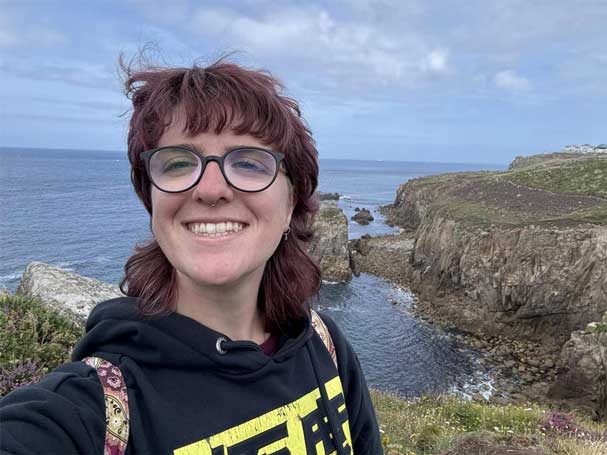
Ellen Gibson taking a selfie near a coastal cliff, wearing glasses and a black hoodie. The background shows rocky cliffs, grass, and the ocean.
  • Name: Ellen Gibson
  • Born: 26 June 2002
  • Age at Conviction: 24
  • Last Known Address: Ropery Close, Kilham, Driffield YO25 4SZ
  • Occupation: Former professional dog walker
  • Previous Convictions: None known
  • Additional Information:
    • Changed plea to guilty at Bodmin Magistrates Court
    • Subject to mental‑health treatment requirement
    • Co‑offender: Jordan Wood (sentenced August 2026)

Incident Details

Between December 2024 and April 2025, Gibson was responsible for Chance and Casper while living at Trekenning Tourist Park, Newquay. During this period:

Chance (Labrador‑type dog)

Close-up of Chance’s face during a veterinary exam. His eye is red and swollen, with small puncture-like marks near the eyelid. Hands gently hold his head still.
A close view of Chance’s ear being lifted for examination. Small dark marks are visible on the outer ear, and he is wearing a red harness and blue collar.
  • Sustained multiple traumatic head, throat, and spinal injuries over several months
  • Whiskers burned off
  • Suffered repeated blunt‑force trauma
  • Gibson failed to obtain prompt veterinary treatment for severe head injuries
  • Seized by police following vet concerns
  • Despite weeks of RSPCA care, Chance had undetected internal injuries including:
    • Crushed trachea
    • Fractured hyoid bone
  • His trachea collapsed while running in a field, causing respiratory failure and death

Casper (cat)

  • Acquired by Gibson after Chance’s seizure, despite RSPCA involvement
  • Plan was in place to remove him for safety
  • Gibson posted online that Casper had died before removal could occur
  • RSPCA intercepted his body prior to cremation
  • Post‑mortem revealed:
    • Catastrophic chest trauma
    • Multiple rib fractures across three timelines
    • Severe head injuries
    • Blindness
    • Organ damage
  • Injuries consistent with prolonged, repetitive violence
  • Died as a result of inflicted trauma

Animal Victims

Chance

  • Species: Dog
  • Breed Type: Labrador‑type
  • Sex: Unknown
  • Age: Unknown
  • Injuries: Multiple traumatic head, throat, and spinal injuries; crushed trachea; fractured hyoid bone; burned whiskers
  • Fate: Died from respiratory collapse following undetected internal injuries

Casper

  • Species: Cat
  • Sex: Male
  • Age: Unknown
  • Injuries: Catastrophic chest trauma; multiple rib fractures across three timelines; severe head injuries; blindness; organ damage
  • Fate: Died from inflicted injuries
  • Photos: ✘ None available

Sentence

Court: Bodmin Magistrates Court
Date: 24 September 2026

Penalty:

  • 23‑week prison sentence, suspended for two years
  • 15‑year ban on keeping animals (expires September 2041)
  • Mental‑health treatment requirement
  • £1,000 costs
  • £154 surcharge

    Mitigation:
  • Guilty plea
  • Mental‑health factors considered by the court

RSPCA Statement

RSPCA Inspector Jack Alderson said:

“The cruelty inflicted upon innocent animals like Chance and Casper is an unforgivable betrayal of trust. Every living creature deserves a life free from suffering and filled with compassion.”

Linked Cases

This case is directly linked to the conviction of Jordan Wood, who was jailed for 18 months and banned for life for inflicting the violence that caused Chance and Casper’s deaths.

Voice
Companion Life