Category Archives: Yorkshire and The Humber

Doncaster, South Yorkshire: Lewis Wray & Jake McLay

Jake McLay is shown in a social media photograph on the left, while fellow animal abuser Lewis Wray is shown in a custody photograph on the right.
Jake McLay (left) in a social media photograph alongside a custody image of Lewis Wray (right).

Two Doncaster men have been sentenced for using their dogs to hunt and kill wildlife, leaving the animals with untreated injuries from repeated illegal hunting trips.

Lewis Richard Wray, 38, previously of Runnymede Road, Intake, faced 13 offences including docking puppies’ tails, causing unnecessary suffering, failing to meet dogs’ needs, and using dogs to hunt and kill wild mammals.

animal abuser Jake McLay is shown standing on rocks beside the sea wearing shorts, with waves breaking behind him in a social media photograph.
Despicable wildlife persecutor Jake McLay enjoys the sea air.

His associate, Jake Dominik McLay, aged 30, of Lime Tree Avenue, Armthorpe, faced four related charges.

Officers from the RSPCA’s Special Operations Unit — a specialist team dealing with serious and organised animal crime — attended Wray’s address on 20 December 2024 as South Yorkshire Police executed a warrant. Intelligence passed from Naturewatch Foundation had linked Wray’s social media accounts to hunting footage.

A dog associated with the Jake McLay and Lewis Wray wildlife crime case, photographed with visible facial injuries.

Four dogs were found at the property: Ruby, a wire‑haired lurcher, and three Patterdale terriers — Peanut, Pip and Sky. All showed scarring consistent with repeated violent encounters with wildlife.

Inspector Claire Mitchell noted healed scarring under the chins of Pip and Peanut.

A black, short‑haired dog with a slender build stands on grass, wearing a multicoloured leash and looking directly at the camera with amber eyes.

A vet later confirmed Peanut had been docked and had deep historical scarring around her face and ears. Pip, also docked, had multiple scars, very deep wounds under her chin and large patches of missing fur. Sky had an obvious facial scar and was also docked.

Wray initially denied owning a phone or using social media, but officers heard his device ringing upstairs. When seized and analysed, the phone contained videos of his dogs hunting, fighting and killing wildlife including foxes and badgers, along with chat messages between Wray and McLay showing regular hunting trips, shared footage and coordination with other individuals involved in illegal wildlife persecution.

An older dark‑coated dog with grey fur around the muzzle stands on a veterinary examination table while a gloved hand gently supports its head.

The chats triggered a secondary SOU operation on 13 May 2025. Two further warrants were executed in Doncaster, leading to the seizure of three more dogs — Reggie, Rosie and Max. Reggie had extensive healed scarring to his face, muzzle, legs, chest and hocks. Messages revealed Reggie had suffered a significant chin injury which had been stapled at home instead of receiving veterinary treatment.

Convicted Wildlife Killer Jake McLay Appears Dancing in Social Media Clip

At Sheffield Crown Court on 12 October 2026, Wray was sentenced to three years in prison and banned from keeping animals for life. McLay received nine months’ imprisonment, suspended for 12 months, alongside 250 hours of unpaid work and a 12‑year animal ban.

Wray’s criminal history is extensive. He is currently on life parole, having been released part‑way through a life sentence for murder imposed n 2005 when he was 17.

Lewis Wray and Emma Johnson pose closely for an outdoor selfie under a blue sky with scattered clouds; Wray wears a light blue shirt with striped sleeves and Johnson has long brown hair and a dark top.
Lewis Wray and Emma Johnson together. Johnson was prosecuted by the RSPCA alongside Wray, though charges were likely dropped as part of a plea deal.

His partner Emma Johnson was prosecuted by the RSPCA alongside Wray, but it appears the case against her did not proceed.

Court listing showing Wray, Johnson and McLay scheduled for plea and trial preparation at Sheffield Crown Court, with RSPCA involvement noted.

Johnson herself has a record of dangerous driving and organised shoplifting, having led police on a high‑speed pursuit through York and Tadcaster during a planned raid at a shopping centre. Both received suspended sentences for that offence, with the judge describing them as “sophisticated, if not professional shoplifters”.

Sentence

Wray: 3 years’ imprisonment; lifetime animal ban.
McLay: 9 months’ imprisonment, suspended for 12 months; 250 hours of unpaid work; 12‑year animal ban (expires October 2038).

At a Glance

  • Location: Doncaster, South Yorkshire
  • Offenders: Lewis Richard Wray, born c. 1988; Jake Dominik McLay, born 22 November 1995
  • Addresses:
    • Lewis Richard Wray: formerly of Runnymede Road, Intake, Doncaster
    • Jake Dominik McLay: Lime Tree Avenue, Armthorpe, Doncaster
    • Emma Johnson: Runnymede Road, Intake, Doncaster
  • Offences: Illegal hunting; causing unnecessary suffering; failing to meet dogs’ needs; docking puppies’ tails
  • Investigation Lead: RSPCA Special Operations Unit
  • External Intelligence: Naturewatch Foundation (social‑media intelligence identifying hunting activity)
  • Dogs Involved: Ruby (lurcher); Peanut, Pip, Sky (Patterdale terriers); Reggie, Rosie, Max
  • Key Evidence: Hunting videos; chat logs; deep historical scarring; untreated injuries; home‑stapled wound
  • Additional Defendant: Emma Johnson (prosecuted by RSPCA; charges likely dropped as part of plea deal)
  • Wray Background: Convicted murderer on life parole; dangerous driving; organised shoplifting
  • Outcome: Wray jailed; McLay suspended sentence
  • Animal Bans: Wray — lifetime; McLay — 12 years

Doncaster Free Press
Companion Life


UKACF Commentary

This was not casual poaching or opportunistic lamping. This was organised wildlife persecution, carried out by two men who knew exactly what they were doing. The dogs’ injuries — deep scarring, docked tails, untreated wounds — show repeated exposure to violent encounters with foxes and badgers.

Wray’s background matters. He is a convicted murderer on life parole, repeatedly involved in serious criminality, including dangerous high‑speed pursuits and professional shoplifting raids. His behaviour shows a long‑standing disregard for law, safety and animal welfare.

McLay was not a passive participant. The chat logs show active planning, shared videos and regular joint hunting trips. Both men were part of a wider network involved in illegal wildlife persecution.

The lifetime ban for Wray is appropriate. The 12‑year ban for McLay reflects his role but still leaves a future risk.

Sheffield, South Yorkshire: Amini Ato

Two dogs are shown in a narrow brick passageway; the dog at the rear is emerging from a small wooden doorway while gently carrying a puppy in its mouth, indicating movement within cramped conditions.

“Exploited” Amini Ato kept more than 40 dogs in filthy, cramped and dangerous conditions at an allotment, where she said she slept overnight with a gas stove while the animals deteriorated around her.

Police and RSPCA officers attended the Infield Lane allotments in Darnall on 2 May 2024 after concerns were raised about the welfare of dozens of dogs being kept there.

Inside the ramshackle kennel set‑up, officers found over forty dogs confined in dirty, soiled pens with concrete floors, inadequate bedding and little access to clean water.

Many were panting for water, some barely able to move, and several were suffering from chronic skin disease, infected calluses and mobility issues that had clearly gone untreated for months.

An elderly German Shepherd was discovered with degenerative spinal disease, sore eyes and stiff joints, and had to be euthanised due to the severity of his condition.

Two bulldog‑type dogs with severe, discharging skin problems were also put to sleep. Several XL bullies were seized, including two that were unregistered.

A dog is shown behind a metal wire fence, pressing its face against the bars, highlighting confinement in a dark enclosure.

Veterinary examinations confirmed that dogs at the site had been used for breeding and that suffering had continued for a prolonged period.

Ato admitted causing unnecessary suffering, failing to ensure welfare, possessing fighting dogs and operating an unlicensed s.13(2) activity.

Although the court accepted she had been “exploited” and “overwhelmed”, officers made clear that the dogs’ welfare had never been prioritised.

Sentence

Court: Sheffield Magistrates’ Court
Date: 19 October 2026
Penalty: 18 weeks’ imprisonment, suspended for 12 months; 120 hours of unpaid work; £614 costs
Ban: Seven‑year animal ownership ban (expires October 2033)

Police Statement

PC Dean Leadwood said: “What was uncovered was nothing short of heartbreaking and no animal should ever be forced to live in the conditions we found them in.

“While some dogs had to be sadly put to sleep, many were rehabilitated in RSPCA care and went on to find loving homes.”

At a Glance

Offender: Amini Ato
Born: circa 1974
Address: Middle Hay Place, Gleadless Valley, Sheffield S14 1QG
Animals Involved: 40+ dogs including XL bullies, bulldog‑types and an elderly German Shepherd
Offences: Causing unnecessary suffering; failing to ensure welfare; possessing fighting dogs; operating a s.13(2) activity without a licence (running an animal business without the legally required licence).
Condition: Severe skin disease, infected calluses, mobility issues, dehydration; three dogs euthanised
Outcome: Suspended sentence, unpaid work, seven‑year ban; majority of dogs rehabilitated
Additional: Claims to have slept at allotments with gas stove; relied on charitable vet until unable to pay; dogs used for breeding.

The Star
BBC News


UKACF Commentary

Ato’s case is not simply about neglect. The scale, the breeds involved, the breeding activity, and the conditions uncovered all point to something far more organised than a struggling woman “sleeping at the allotments with a gas stove”. That narrative may have satisfied the court, but it does not align with the reality of 40+ dogs, including XL bullies, bulldog‑types, and an elderly German Shepherd, all kept in a makeshift kennel compound on an allotment plot.

A large dark‑coated dog is shown behind a metal grid, its face pushed close to the bars in a dimly lit enclosure, emphasising restricted space and confinement.

This was not a handful of unwanted pets. It was a multi‑breed holding site, with dogs in varying stages of health, age and physical condition — a pattern entirely consistent with back‑yard breeding, guard‑dog supply, and protection‑animal circulation.

The presence of unregistered XL bullies is especially significant. These dogs do not simply appear in large numbers by accident. They are part of a high‑risk, high‑demand underground market, often tied to criminal groups who use them for intimidation, guarding, breeding, and, in some cases, fighting.

The veterinary findings confirm that dogs at the site had been used for breeding, and the sheer number of animals suggests a throughput far beyond what one person could manage legitimately.

Allotment‑based kennels are a known tactic in organised dog‑related crime: they provide privacy, distance from residential scrutiny, and a place to store dogs used for breeding, guarding, or fighting without attracting neighbours’ complaints.

The suffering found — untreated skin disease, infected calluses, mobility issues, dehydration — is typical of dogs kept as stock, not pets. These were animals being held, not cared for. The fact that some were so neglected they had to be euthanised indicates long‑term abandonment of welfare, not a sudden collapse in circumstances.

The court accepted that Ato had been “exploited by others”. UKACF agrees — but exploitation in this context usually means involvement in a wider criminal network. Vulnerable individuals are frequently used as front‑keepers for dogs belonging to organised groups, particularly when banned breeds or fighting‑type dogs are involved. The allotment location, the number of dogs, the breeding activity, and the presence of XL bullies all strongly suggest that Ato was not operating alone.

Whether she was breeding dogs for sale, holding dogs for others, or acting as a caretaker for animals linked to illegal breeding, guard‑dog supply or dog‑fighting activity, the operation fits the profile of a low‑level node in an organised dog‑crime chain. The suffering uncovered is exactly what happens when criminal groups prioritise profit, intimidation and control over welfare.

Despite this, the sentence imposed — a suspended term and a seven‑year ban — does not reflect the seriousness of the operation or the risks associated with the breeds involved. The dogs’ suffering was prolonged, predictable and preventable, and the wider criminal context remains unaddressed.

For these reasons, UKACF has flagged this case across multiple categories: Animal Hoarding, Denial of Veterinary Treatment, Psychological Abuse, Unfit Living Conditions, and Commercial Exploitation through Pet Profiteering and Security‑Dog Supply.

In addition, the presence of XL bullies, bulldog‑types, breeding activity and “fighting dogs” places this case firmly within Organised Animal Crime, with indicators consistent with Dog Fighting networks and the wider criminal trade in protection and intimidation animals. The red flags for organised activity are too strong to ignore.

Holmfirth, West Yorkshire: Ryan Miller

Animal abuser Ryan Miller is shown standing on a carpeted staircase indoors, wearing a light button‑up shirt. He has short hair and a beard and is looking toward the camera.
Ryan Miller abandoned his dog and left her to suffer without food, care, or help.

Case Summary

In January 2026, American bully cross Mabel was found abandoned in a cold, dark cellar at a property on Greenfield Road, Holmfirth. Her owner, 44‑year‑old Ryan David Alfred Miller, had left her alone for around three weeks with no food, no water and no bedding other than a single sofa cushion. The cellar was filthy, unheated and entirely unsuitable for any animal.

Mabel was discovered by the landlord in a severely emaciated and dehydrated state. A vet later confirmed her body condition score was one out of nine, describing her level of suffering as “very high”. The RSPCA was told that had she not been found when she was, she would likely have died within days.

A behavioural assessment concluded that Mabel would have experienced fear, anxiety, panic and frustration throughout the prolonged period of abandonment.

Prosecutor Louise Freeman told the court that Miller was Mabel’s sole owner and had previously been reminded by the RSPCA that dogs must not be left for long periods.

Despite this, he left her without care for weeks.

Mabel was signed over to the RSPCA and has since been rehomed.

Miller, a father of five and a chef by trade, had previously lived at Batley Street, Moldgreen HD5 9DD, and formerly ran a catering street‑food business called Hungry Turtle Holmfirth.

At the time of the offence he was living at Greenfield Road, Holmfirth, but later moved to Kilburn, near Thirsk, North Yorkshire.

Animal abuser Ryan Miller is wearing a black leather jacket over a light shirt stands near a glass door with decorative lettering behind him. He is facing the camera in a casual pose.

In mitigation, the court heard that Miller claimed he had been threatened, beaten and warned not to return to the property due to debts, and had gone to stay with his ex‑partner.

His representative said he had “buried his head in the sand”, and that Mabel’s suffering was a consequence of his personal circumstances.

The probation officer told the court that Miller had given “no consideration for this dog whatsoever”, describing the neglect as wilful.

Sentencing

Miller appeared before Kirklees Magistrates’ Court on 9 October 2026 and admitted two offences under the Animal Welfare Act 2006.

He was sentenced to 38 weeks’ custody, suspended for 12 months, ordered to complete 200 hours of unpaid work, and given an indefinite ban on keeping animals.

He must pay £587 in costs, and magistrates granted the RSPCA an order to recover legal and veterinary fees, estimated at around £3,000.

Animal abuser Ryan Miller is wearing a black patterned bandana and a white shirt stands in a commercial kitchen, with a metal vent hood and equipment visible behind him

The court noted that Miller had been working at the time but was behind on rent and bills, and that the offence involved “serious animal cruelty and a long period of neglect”.

RSPCA Statement

The RSPCA said Mabel had endured extreme suffering during the weeks she was left alone in the cellar. A vet confirmed she was close to starvation and would likely have died within days had she not been discovered. The charity emphasised that Miller had previously been warned not to leave dogs for extended periods, yet still abandoned Mabel without any provision for her welfare.

At a Glance

Offender: Ryan David Alfred Miller
Born: circa 1982
Age at Conviction: 44
Addresses:
• Greenfield Road, Holmfirth (offence location)
• Batley Street, Moldgreen, HD5 9DD (previous address)
• Kilburn, near Thirsk, North Yorkshire (current address)
Occupation: Chef; former owner of Hungry Turtle Holmfirth street‑food business
Animal Victim: Mabel – American bully cross, severely emaciated, rehomed
Body Condition: 1/9
Injury Timeline: Approximately three weeks of abandonment; near‑fatal starvation and dehydration
Reporting Gaps: None noted beyond Miller’s claimed personal circumstances

YorkshireLive

Barrow, Cumbria: Penny Garner‑Carpenter

Several dogs are confined in tiered metal cages inside a dimly lit vehicle. Bowls, tools and scattered items lie on the floor, and the crates are stacked three levels high.

Penelope Garner-Carpenter has been banned from keeping animals for life after RSPCA inspectors discovered 21 pedigree Collie dogs and a cat living in filthy, cramped and dangerous conditions inside her van and caravan.

The animals were found stacked in heavily soiled crates, many without bases, with faeces and urine ingrained throughout the metal bars and plastic trays.

Side‑by‑side images of the same dog: on the left, thin and dirty on a concrete floor next to a sign marked “6”; on the right, clean, healthy and standing indoors on a blanket with toys and shelves behind.

Ten of the dogs were emaciated, anaemic and stained in faeces and urine, with pressure sores and matted fur. One Collie was later euthanised due to continuing ill health.

RSPCA officers rescued 21 Collies and a cat from filthy stacked crates inside a van and caravan in Barrow. Ten dogs were emaciated and one was euthanised. This video shows the moment inspectors uncovered the shocking conditions

Police first attended the scene on Walney Road on 14 July 2025 after emergency calls about dogs tied to a fence in the Farmfoods car park.

More dogs were then discovered inside a Transit van and a caravan being towed behind it.

A cluttered caravan interior with debris, bedding, bottles and household items covering the floor and benches. The space appears dirty, cramped and heavily disorganised.

RSPCA Inspector Carl Larsson described the cargo area of the van as having a strong, unpleasant smell of urine and faeces, with crates stacked three high in near‑darkness and extreme heat. An unopened pack of raw chicken thighs was found in the cluttered cab — the food Garner‑Carpenter claimed she was feeding them.

Two dogs are kept in separate metal cages inside a messy indoor room with bags, clothing and household items scattered around. One dog is standing while the other lies down.

The caravan was in a similar state. Dogs were housed in metal crates with missing bases, no bedding and extensive contamination. Many had diarrhoea and were sitting in it.

The cat, kept inside the caravan with some of the dogs, was terrified and unable to hide, causing extreme stress.

Two images of the same dog: on the left, slightly dirty and standing outdoors beside a sign marked “12”; on the right, clean and lying comfortably on a carpeted floor indoors.

A vet examined all the animals at the police station. Ten dogs had a body condition score of one out of ten — severely emaciated — and were covered in faeces and urine more than 24 hours old. All were extremely anaemic, a condition that would have taken months to develop, worsened by malnutrition. Several dogs had pressure sores, matted fur, diarrhoea and dehydration. One female Collie was so dehydrated she required overnight fluids.

The vet concluded that the suffering was entirely preventable with basic provisions such as flea control, adequate diet and appropriate housing. The cat had also suffered due to the crowded, dirty environment and inability to escape the dogs.

An empty white metal animal crate sits on a concrete floor with dirt visible inside. Two sheets of paper marked “7” and “8” rest on top of the crate.

Garner‑Carpenter told the RSPCA she had been “on the road” with her pets since June 2025 after losing her home, claiming she fed them raw chicken daily and rotated their time outside due to having limited leads. She admitted they spent too long in the crates but continued to deny the offences in court.

Sentence

Penelope Garner‑Carpenter, 67, was sentenced at South Cumbria Magistrates’ Court on 25 September 2026. She received a 22‑week custodial sentence, suspended for 12 months, for three animal welfare offences. The judge noted her poor health and the prospect of rehabilitation when deciding to suspend the sentence.

She was disqualified for life from owning, keeping, dealing in or transporting animals.

One dog was euthanised on veterinary advice; the remaining 20 dogs and the cat were successfully rehomed by RSPCA branch‑run centres and Animal Rescue Cumbria.

At a Glance

  • Defendant: Penelope Garner‑Carpenter (born 25 April 1959)
  • Original Location: Walney Road, Barrow, Cumbria
  • Later Address: Moss Road, Askern / Hatfield Woodhouse, Doncaster; links to Newcastle-under-Lyme in Staffordshire, Northallerton in North Yorkshire, and Trimdon Station in County Durham
  • Animals Involved: 21 Collies (16 female, 5 male) and 1 cat
  • Key Issues: Emaciation, anaemia, faeces‑soiled crates, extreme heat, lack of light, untreated medical conditions
  • Euthanised: One Collie
  • Rehomed: 20 dogs and the cat
  • Ban Length: Lifetime
  • Court: South Cumbria Magistrates’ Court

RSPCA Statement

Inspector Will Lamping, who led the investigation, said: “Keeping so many dogs in crates in these conditions was totally unacceptable. There would have been barely room to move, distress from excessive noise and the animals would have been forced to toilet in the small space they had been provided with.

“Crates should only be used for short periods of time, with suitable training, and should never be used as a permanent environment for a dog.”

He thanked Cumbria Police and the RSPCA’s network of centres for their work in rescuing and rehoming the animals.

The Mail
News & Star
RSPCA

Sheffield, South Yorkshire: Kingston Billings

A young man with curly hair and a black zip‑up jacket poses indoors, holding two fingers up near his face. Sunlight highlights his features. This image shows Kingston Billings, who was convicted in Sheffield in 2026 for failing to treat his kitten’s broken leg.

Case Summary

Kingston Billings left his kitten, Prince, suffering with a fractured leg caused by blunt force trauma and failed to seek veterinary treatment for at least 17 days.

A young man wearing glasses and a red jacket holds an orange tabby kitten named Prince. The kitten looks toward the camera with its mouth slightly open. Billings was later convicted for leaving Prince with a fractured leg caused by blunt‑force trauma and failing to seek veterinary treatment.
Kingston Billings with Prince — the kitten he left suffering with a broken leg caused by blunt‑force trauma.

Although he eventually presented Prince at a free‑treatment clinic, he ignored follow‑up care, failed to collect prescribed analgesia, and later disposed of the injured kitten. He pleaded guilty to one animal welfare offence and received a five‑year ban on keeping animals.

Offender Overview

A young man stands on a wooden boardwalk near a rocky shoreline, wearing pink shorts and making a peace sign. Another person stands beside him. The young man is Kingston Billings, later convicted for leaving his kitten Prince with an untreated fractured leg.
  • Name: Kingston Billings
  • Born: 7 October 2007
  • Age at Conviction: 18
  • Last Known Address: Merlin Way, Sheffield
  • Previous Address (time of offence): Busk Meadows, Shirecliffe, Sheffield
  • Occupation: Unemployed; stated he was actively seeking work
  • Previous Convictions: Unknown
  • Additional Information: Claimed to have “given Prince away”; refused to engage with RSPCA; failed to attend court, resulting in a warrant.

Incident Details

  • Prince, a ginger‑and‑white kitten, suffered a fractured right hind leg caused by blunt force trauma.
  • Billings claimed the injury occurred on 26 December.
  • Prince was not taken to a vet until 9 January, despite being unable to bear weight.
  • The vet confirmed the fracture had been present for at least two weeks.
  • Billings was given pain relief and instructed to return on 12 January — he did not attend and did not collect the medication.
  • RSPCA inspectors attempted multiple visits; Billings avoided contact.
  • On phone contact (12 February), he stated he had “given Prince away” and refused further engagement.
  • He later failed to attend court; a warrant was issued and he eventually surrendered.

A veterinary statement confirmed Prince suffered for a minimum of 17 days, and that any reasonable owner would seek treatment within 24 hours for a non‑weight‑bearing limb.

Animal Victims

Prince

  • Species: Cat
  • Breed: Domestic short‑hair (ginger and white)
  • Injury: Fractured right hind leg caused by blunt force trauma
  • Suffering: Minimum 17 days
  • Fate: Rehomed (details unknown)
  • Notes: Pain relief was available free of charge but not collected.

Sentence

Court

Sheffield Magistrates’ Court

Date

15 September 2026

Penalty

  • 5‑year ban on keeping animals (expires September 2031)
  • 18‑month Community Order
    • 25 Rehabilitation Activity Requirement days
    • 150 hours unpaid work
  • £114 Victim Surcharge
  • £150 costs

Mitigation

  • Defendant said he was actively seeking employment
  • Claimed Prince had been rehomed

RSPCA Statement

Inspector Leanne Booth said: “It is heartbreaking that poor Prince was left to suffer from such a serious injury and veterinary treatment should have been sought immediately to help him.”

Companion Life
The Star


UKACF Commentary

The case of Kingston Billings raises several serious safeguarding concerns that go far beyond the single charge brought before the court. Prince’s fractured leg — confirmed by a veterinary professional to be caused by blunt‑force trauma — is not an injury that happens without force, intent, or a significant accident. Yet Billings provided no explanation for how this trauma occurred. The circumstances surrounding the injury remain completely unaccounted for, leaving a troubling gap in the narrative that should concern anyone assessing future risk.

Equally concerning is the issue of Prince’s disappearance. Billings claimed he had “given Prince away”, but this assertion is not supported by any evidence. Prince was still injured, still in pain, and still in need of follow‑up treatment and medication that Billings never collected. Rehoming a kitten in that condition is not credible, and without proof of life, Prince’s fate must be recorded as unknown. This lack of clarity is not a minor detail — it is a critical safeguarding failure.

Furthermore, Billings was responsible for two kittens, yet only Prince appears in the court record. The whereabouts and welfare of Prince’s sister are entirely unaccounted for. No information was provided to the RSPCA, the court, or the public. The absence of any mention of her fate raises additional concerns about Billings’ overall treatment of animals and whether other harm may have occurred outside the scope of the prosecution.

Taken together — the unexplained blunt‑force trauma, the prolonged suffering without veterinary care, the disposal of an injured animal, the missing proof of life, and the second kitten whose fate is unknown — these factors form a pattern of behaviour that should have triggered a far more robust safeguarding response. A five‑year ban does not reflect the seriousness of the risk indicators present in this case.

UKACF will continue to monitor this individual and seek further information regarding both Prince and his sister.

Cases like this highlight the ongoing need for stronger sentencing frameworks and more comprehensive investigations when animals are injured, missing, or unaccounted for.

Bradford, West Yorkshire: Paul Wright

A close-up portrait of dog killer Paul Wright sitting indoors against a grey brick wall, wearing a dark sleeveless top with white trim. He has short hair and a beard and is looking directly at the camera.
Paul Wright left a dog to starve in a dark cellar, scratching at the door in her final days. A lifetime ban is the least he deserves.

Case Summary

A spaniel named Biscuit died after being deliberately left to starve in a dark, rubbish‑filled cellar for at least ten days.

Scratch marks on the cellar door showed her desperate attempts to escape.

A worn wooden cellar door showing multiple scratch marks across its surface, indicating repeated attempts by Biscuit to claw her way out. The surrounding frame is dirty and deteriorated, reflecting the neglected environment she was confined in.
Scratch marks on the cellar door where Biscuit tried desperately to escape.

When found, Biscuit’s body was emaciated, weighing less than half of a healthy dog of her size.

The environment contained no food, no water, no bedding, and faeces on the floor.

Paul Wright pleaded guilty to causing unnecessary suffering but avoided immediate custody. He received a suspended sentence and a lifetime ban on keeping animals.

Offender Overview

  • Name: Paul Wright
  • Born: 5 February 1989
  • Age at Conviction: 37
  • Last Known Address: Hawkshead Drive, Little Horton, Bradford BD5 0TJ
  • Previous Address: Southfield Lane, Little Horton, Bradford BD7 3NN
  • Occupation: Unknown
  • Previous Convictions: Unknown
  • Additional Information: Unrepresented in court; admitted Biscuit had not seen a vet “for years.”

Incident Details

Biscuit was discovered on 26 November 2025 in the cellar of Wright’s former property on Southfield Lane.

The body of Biscuit, a small spaniel, lying on the cellar floor amid clutter, rubbish, and debris. Her frame appears severely emaciated, confirming long‑term neglect. The environment is filthy and chaotic, with discarded items and dirt surrounding her.
Biscuit’s skeletal body found in the cellar

The cellar was described as dark, cluttered with household rubbish, and without any visible food or water. There was faeces on the floor, no identifiable bedding, and Biscuit’s body was found under a plastic chair.

Scratch marks on the rear of the cellar door indicated prolonged distress and attempts to escape.

A close-up selfie of Paul Wright indoors, sticking out his tongue toward the camera. Another person is partially visible beside him. The background shows household items out of focus.

A vet assessed Biscuit’s body condition score as 0.5/5, noting no muscle mass, severe emaciation, and an untreated parasitic infection. Biscuit weighed just 7kg; a healthy dog of her size should weigh around 15kg.

The RSPCA stated Biscuit’s suffering lasted at least 10 days, potentially longer, and that her deterioration would have been obvious. Wright failed to seek any veterinary assistance.

Animal Victims

  • Name: Biscuit
  • Species: Dog
  • Breed: Spaniel
  • Sex: Female
  • Age: Unknown
  • Condition: Emaciated; body score 0.5/5; untreated parasitic infection
  • Fate: Died of starvation
  • Photos: Not available
  • Additional Notes: Severe prolonged neglect; found in filthy cellar environment

Sentence

Court: Bradford Magistrates’ Court
Date: September 2024

Penalty:

  • 6‑month prison sentence, suspended for 12 months
  • 6 RAR days
  • 150 hours of unpaid work
  • £400 costs
  • £154 surcharge

Mitigation:

  • Wright offered no mitigation; stated only that Biscuit had not seen a vet “for years.”

Animal Ban:

  • Lifetime ban on keeping or caring for animals
  • Not eligible to appeal for 10 years

RSPCA Statement

Louise Freeman, prosecuting for the RSPCA, described the case as “prolonged negligence culminating in Biscuit’s death in an emaciated state.” She detailed the appalling conditions, the absence of food and water, the scratch marks on the cellar door, and Biscuit’s extreme physical deterioration.

Telegraph & Argus
YorkshireLive


UKACF Commentary

Biscuit’s final days were not a momentary lapse or a single act of carelessness — they were a slow, agonising descent into starvation, fear, and isolation.

Ten days trapped in a dark cellar, scratching at the door in desperation, surrounded by rubbish and filth, with no food, no water, and no comfort. Her suffering was prolonged, obvious, and entirely preventable.

Paul Wright standing outdoors on a street lined with autumn trees, wearing a white T‑shirt with a printed design. Another person is partly visible on the left side of the frame.

Cases like this expose the quiet cruelty that happens behind closed doors: not explosive violence, but the cold indifference of simply doing nothing while an animal wastes away. Biscuit didn’t die quickly. She died inch by inch, losing muscle, strength, hope — until her body could no longer fight.

Her weight, half of what it should have been, tells its own story. The scratch marks on the cellar door tell another. Together they paint a picture of a dog who tried to survive, who tried to escape, who tried to be seen — and wasn’t.

A lifetime ban is the least society can offer in response to suffering like this. Biscuit deserved better than a dark cellar and a slow death. She deserved care, companionship, and dignity. Her story will not be forgotten.

Kilham, East Yorkshire: Ellen Gibson

Ellen Gibson sitting indoors while a small brown dog licks her chin. She is wearing glasses and a black shirt, and the background shows household furniture and plants.
Former dog walker Ellen Gibson permitted the prolonged suffering that led to the death of a dog and cat.

Case Summary

Ellen Gibson, 24, was convicted for her role in the prolonged suffering and eventual deaths of a Labrador‑type dog named Chance and a cat named Casper.

Although not the primary perpetrator of the violence, Gibson permitted the abuse to occur, failed to prevent it, and failed to obtain prompt veterinary treatment for Chance’s catastrophic head injuries.

Close-up of Chance, a brown dog, being held gently during a veterinary examination. One eye appears swollen and irritated, and the setting resembles a clinic.
Chance sustained multiple traumatic head, throat, and spinal injuries over several months. He’d also had his whiskers burned off.

She later acquired Casper despite ongoing RSPCA involvement, and he too died from severe, repeated trauma.

Her offending is linked to the case of Jordan Wood, who inflicted the physical violence that caused both animals’ deaths. Wood was jailed for 18 months and banned for life in August 2026. Gibson was sentenced separately in September 2026.

Offender Overview

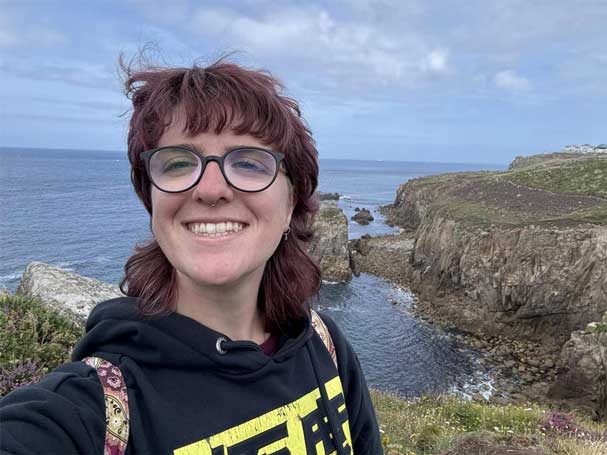
Ellen Gibson taking a selfie near a coastal cliff, wearing glasses and a black hoodie. The background shows rocky cliffs, grass, and the ocean.
  • Name: Ellen Gibson
  • Born: 26 June 2002
  • Age at Conviction: 24
  • Last Known Address: Ropery Close, Kilham, Driffield YO25 4SZ
  • Occupation: Former professional dog walker
  • Previous Convictions: None known
  • Additional Information:
    • Changed plea to guilty at Bodmin Magistrates Court
    • Subject to mental‑health treatment requirement
    • Co‑offender: Jordan Wood (sentenced August 2026)

Incident Details

Between December 2024 and April 2025, Gibson was responsible for Chance and Casper while living at Trekenning Tourist Park, Newquay. During this period:

Chance (Labrador‑type dog)

Close-up of Chance’s face during a veterinary exam. His eye is red and swollen, with small puncture-like marks near the eyelid. Hands gently hold his head still.
A close view of Chance’s ear being lifted for examination. Small dark marks are visible on the outer ear, and he is wearing a red harness and blue collar.
  • Sustained multiple traumatic head, throat, and spinal injuries over several months
  • Whiskers burned off
  • Suffered repeated blunt‑force trauma
  • Gibson failed to obtain prompt veterinary treatment for severe head injuries
  • Seized by police following vet concerns
  • Despite weeks of RSPCA care, Chance had undetected internal injuries including:
    • Crushed trachea
    • Fractured hyoid bone
  • His trachea collapsed while running in a field, causing respiratory failure and death

Casper (cat)

  • Acquired by Gibson after Chance’s seizure, despite RSPCA involvement
  • Plan was in place to remove him for safety
  • Gibson posted online that Casper had died before removal could occur
  • RSPCA intercepted his body prior to cremation
  • Post‑mortem revealed:
    • Catastrophic chest trauma
    • Multiple rib fractures across three timelines
    • Severe head injuries
    • Blindness
    • Organ damage
  • Injuries consistent with prolonged, repetitive violence
  • Died as a result of inflicted trauma

Animal Victims

Chance

  • Species: Dog
  • Breed Type: Labrador‑type
  • Sex: Unknown
  • Age: Unknown
  • Injuries: Multiple traumatic head, throat, and spinal injuries; crushed trachea; fractured hyoid bone; burned whiskers
  • Fate: Died from respiratory collapse following undetected internal injuries

Casper

  • Species: Cat
  • Sex: Male
  • Age: Unknown
  • Injuries: Catastrophic chest trauma; multiple rib fractures across three timelines; severe head injuries; blindness; organ damage
  • Fate: Died from inflicted injuries
  • Photos: ✘ None available

Sentence

Court: Bodmin Magistrates Court
Date: 24 September 2026

Penalty:

  • 23‑week prison sentence, suspended for two years
  • 15‑year ban on keeping animals (expires September 2041)
  • Mental‑health treatment requirement
  • £1,000 costs
  • £154 surcharge

    Mitigation:
  • Guilty plea
  • Mental‑health factors considered by the court

RSPCA Statement

RSPCA Inspector Jack Alderson said:

“The cruelty inflicted upon innocent animals like Chance and Casper is an unforgivable betrayal of trust. Every living creature deserves a life free from suffering and filled with compassion.”

Linked Cases

This case is directly linked to the conviction of Jordan Wood, who was jailed for 18 months and banned for life for inflicting the violence that caused Chance and Casper’s deaths.

Voice
Companion Life

Shipley, West Yorkshire: Henry Brewer

A middle‑aged man standing outdoors, wearing casual clothing, looking directly at the camera. Background shows part of a caravan site.
Serial equine abuser Henry Brewer – responsible for repeated neglect across multiple sites in Baildon and Esholt, including the collapsed foal found in 2023.

Case Summary

Serial equine abuser Henry Brewer of the Esholt Lane Caravan Site, Baildon, Shipley, left a nine‑month‑old foal collapsed in a filthy, squalid stable with a body condition score of 1/5.

Brewer was previously convicted in November 2017 for equine neglect and has now lost his appeal against seven further animal welfare convictions relating to 18 horses kept across three sites in Baildon and Esholt.

Underweight horse standing inside a barren stable block with no bedding and visible signs of neglect.

Brewer insisted his horses were “fine” despite repeated warnings, notices, and veterinary advice.

Officers found limited water, insufficient hay, poor body condition, and ongoing welfare failures across multiple visits.

Offender Overview

Name: Henry Brewer
Born: 18 September 1969
Age at Conviction: 56
Last Known Address: Esholt Lane Caravan Site Esholt Lane Baildon Shipley BD17 7RJ
Occupation: Unemployed / Traveller
Previous Convictions:

  • November 2017 — Causing unnecessary suffering to horses (UKACF case file available) Additional Information:
  • Known to authorities for long‑term equine neglect
  • Horses kept across multiple sites: Old Hollins Hill, Park Lane (Baildon), and Esholt
  • Serial non‑compliance with RSPCA advice and improvement notices

Incident Details

The RSPCA investigation began in January 2023 after concerns were raised about horses in Brewer’s care. Officers found limited water, insufficient hay, and poor body condition, issuing notices for improvement.

Underweight horse standing alone in a field, showing visible signs of neglect and poor body condition.

On 18 January 2023, officers attended Old Hollins Hill and Park Lane with police and a vet. Three underweight horses — including a young foal — were removed due to immediate welfare concerns. Follow‑up visits found continuing issues and a lack of forage.

On 6 March 2023, officers attended Brewer’s Esholt site, where a nine‑month‑old skewbald colt was found collapsed in a stable with a body condition score of 1/5. The stable had no bedding, and the floor was uneven brick and concrete. Police removed the colt and further horses due to the severity of the neglect.

Young colt lying collapsed on the floor of a bare stable, appearing extremely weak and in poor body condition

A specialist equine vet stated: “The poor body conditions of some of the horses were very obvious to see. They were visually in varying degrees of very poor condition. The owner had been previously warned about providing supplementary forage at all times.”

Brewer told officers he believed the horses’ condition was “fine.”

Animal Victims

  • 18 horses across three sites
  • Nine‑month‑old skewbald colt found collapsed (BCS 1/5)
  • Multiple horses underweight and in poor condition
  • Four ponies euthanised due to poor health
  • Remaining horses made good progress in RSPCA care
  • Three foals born to mares already pregnant at the time of removal

Sentence

Court: Bradford Crown Court
Date: Appeal dismissed 3 September 2026

Penalty:

  • 14‑week prison sentence, suspended for 12 months
  • 10‑year disqualification from owning equines (expires September 2036)
  • 100 hours unpaid work
  • 10‑day Rehabilitation Activity Requirement
  • Ordered to pay court costs

    Mitigation: None of significance; Brewer maintained horses were “fine” despite overwhelming evidence of neglect.

RSPCA Statement

An RSPCA spokesperson said: “This was a very upsetting case for our rescuers to investigate. Seeing this number of horses, including a foal, being let down by their owner — who continued to fail to provide suitable care despite advice and notices — was frustrating and very sad.”

YorkshireLive
Telegraph & Argus


UKACF Commentary

Some offenders teach you exactly what happens when the justice system gives someone a second chance they never deserved. Henry Brewer is one of them.

And yet, despite all of this, Brewer walked out of court with no ban. No restriction. No barrier preventing him from owning horses again.

He was ordered to do unpaid work and pay costs — a sentence that meant nothing to a man who had already shown he was willing to hide suffering animals behind caravans and deny there was a problem.

Brewer even told the court he had “always kept his horses like that” and didn’t see anything wrong with it. That should have been the moment the system recognised the danger. It wasn’t.

Young foal standing in a field, tethered with a rope harness, appearing underweight and in poor condition.

When Brewer was convicted in 2017, the evidence was already overwhelming: starving foals, filthy stables, makeshift rope harnesses, hidden horses, and a level of neglect so severe that one mare, Lily, had to be euthanised.

The photos of Tom Jones, trussed up and skeletal, sparked national outrage. Juliette was found in squalor on the same travellers site. Both foals were so thin and weak that their recovery took months of specialist care.

Foal restrained with a rope inside a makeshift enclosure, with ribs visible and inadequate conditions.

The consequences of that failure arrived almost exactly as anyone familiar with equine welfare would expect.

By 2023, Brewer was once again keeping horses in appalling conditions across three separate sites. Officers found limited water, insufficient hay, and animals in visibly poor condition. Notices were issued. Advice was given. Nothing changed. Brewer insisted the horses were “fine.”

Then came the moment that defined this case: A nine‑month‑old foal, collapsed on an uneven brick floor, lying in a stable with no bedding, body condition score 1/5, barely clinging to life.

This wasn’t an accident. This wasn’t ignorance. This was a man who had already been told — by vets, by inspectors, by a court — exactly what he was doing wrong. And he simply chose to do it again.

But there is another uncomfortable truth that must be acknowledged. Even if Brewer had been banned in 2017, it is doubtful that the ban would have been meaningfully adhered to.

Brewer comes from a large, extended family network on the Esholt Lane travellers site, and during the 2016–2017 investigation it was already clear that horses moved between relatives, were hidden from inspectors, and were kept across multiple plots and fields. In cases like Brewer’s, bans only work when the offender respects the law — and Brewer has never shown any willingness to do so.

He hid horses. He denied obvious suffering. He insisted emaciated animals were “fine.”

With that mindset, a ban in 2017 would almost certainly have been circumvented through informal transfers of ownership within the family, leaving the horses in the same environment and under the same practical control.

The tragedy is that a ban might have made it easier for authorities to intervene earlier, but it would not have prevented the suffering entirely.

A middle‑aged man standing outdoors, wearing casual clothing, looking directly at the camera while holding a young child.

Brewer’s behaviour — hiding horses, ignoring notices, denying reality — shows a pattern of deliberate evasion that goes far beyond simple neglect.

The 2026 conviction finally imposes a 10‑year equine ban, but it comes nearly a decade too late, and only after more horses suffered, more died, and a foal was found collapsed on bare brick.

This is what happens when the system underestimates repeat offenders. This is what happens when courts fail to impose bans on individuals who have already demonstrated a pattern of cruelty. This is what happens when warnings, notices, and advice are given to someone who has no intention of changing.

Brewer’s history was written in suffering long before this conviction. The signs were there. The warnings were there. The evidence was there.

The ban should have been there too.

UKACF exists because of cases like this — cases where animals pay the price for human failure, institutional hesitation, and judicial leniency. Brewer’s horses deserved better in 2017. They deserved better in 2023. They deserve better now.

And their suffering will be documented, remembered, and used to demand better protection for the next animals who cannot speak for themselves.

Grangetown, Middlesbrough: Irene Pallent, Derek Lane and Stuart Pallent

Two mugshots placed side‑by‑side. Left: Derek Lane, short hair, wearing a white shirt against a plain light background. Right: Stuart Pallent, short hair, wearing a grey hoodie in an indoor setting with a pale background.
L–R: Derek Lane and Stuart Pallent — two of the three responsible for leaving elderly Jack Russells bald, starving and suffering inside a Grangetown property.

Case Summary

Three Jack Russell Terriers — Sadie, Rosy and Susie — were found in December 2025 at a property on Leighton Road, Grangetown, suffering from advanced skin disease, fur loss, overgrown nails, malnutrition, and in one case, blindness and neurological decline.

Two small dogs are lying close together on a quilted blanket. One has white and brown fur, the other has sparse fur with visible skin patches. They are resting among blankets and fabric pieces in an indoor environment.

All three dogs had been neglected for weeks to months, receiving no veterinary care.

The animals were seized by police and transferred to the RSPCA. The three defendants pleaded guilty to two animal welfare offences each.

Offender Overview

Irene Pallent

  • Born: circa 1961
  • Age at conviction: 65
  • Address: The Peppergarth, Northallerton DL7 8NP
  • Role: Owner of Rosy and Susie; claimed Sadie belonged to her son
  • Previous convictions: Not known
  • Additional information: Declined independent veterinary examination; declined interview

Derek Lane

  • Born: 27 January 1965
  • Age at conviction: 61
  • Address: The Peppergarth, Northallerton DL7 8NP
  • Role: Jointly responsible for all three dogs
  • Additional information: Signed dogs over to RSPCA; refused interview

Stuart Pallent

  • Born: circa1986
  • Age at conviction: 40
  • Address: Yarm Road, Stockton TS18
  • Role: Jointly responsible for all three dogs
  • Additional information: Declined interview

Incident Details

Police attended the property on Leighton Road, Grangetown in December 2025 and removed three severely neglected Jack Russell Terriers.

Sadie

  • Elderly female
  • Almost completely bald
  • Severe dermatitis and pyoderma
  • Blind, with discharge from both eyes
  • Body condition score 2/9 (severely underweight)
  • Neurological symptoms, constantly walking in circles
  • Multiple lumps across her body
  • Suffered at least six weeks due to untreated skin disease
  • Suffered at least four weeks due to untreated weight loss
  • Vet recommended euthanasia due to advanced dementia and suffering
A small dog with very sparse fur and visible skin irritation is standing on a black veterinary examination table. A person in a maroon shirt and purple gloves is gently supporting the dog during an examination.

Rosy

  • Female, 8 years
  • Underweight
  • Severe fur loss
  • Overgrown nails
  • Required six weeks of treatment; later adopted
A small dog with significant hair loss and darkened, patchy skin along its back and sides stands on a black surface in a veterinary clinic. The fur is thicker around the neck and tail.
Rosy
A small dog with severe hair loss in a domestic setting. The dog’s skin is exposed and wrinkled.
Sadie

Susie

  • Elderly female
  • Fur loss
  • Overgrown nails
  • Multiple lumps, including three mammary tumours
  • Despite treatment, her condition deteriorated and she was euthanised

Veterinary Findings

  • All three dogs had advanced skin disease
  • Thickened, reddened skin with severe irritation
  • Strong odour noted
  • Likely cause: flea allergic dermatitis left untreated
  • Long‑term neglect caused infection, hair loss, pain and distress
  • Sadie’s emaciation was visibly obvious and should have prompted urgent care
  • All three dogs suffered unnecessarily due to prolonged lack of treatment

Sentence

Teesside Magistrates Court — 3 September 2026

Irene Pallent

  • 17 weeks’ custody, suspended 12 months
  • 15‑year ban on keeping animals (expires September 2041)
  • £450 costs
  • £154 victim surcharge

Derek Lane

  • 16 weeks’ custody, suspended 12 months
  • 10‑year ban (expires September 2036)
  • £450 costs
  • £154 victim surcharge

Stuart Pallent

  • 16 weeks’ custody, suspended 12 months
  • 10‑year ban (expires September 2036)
  • £450 costs
  • £154 victim surcharge

RSPCA Statement

Chief Inspector Natalie Hill said the dogs had suffered weeks of neglect because the defendants had not provided even basic care. She noted that flea treatment is a routine responsibility and that Sadie’s condition was particularly distressing.

A small tan and white dog with a scruffy coat is sitting on a beige carpet. The dog is wearing a bright green collar and is positioned near a dark brown piece of furniture.
Rosy pictured in her new home

Rosy has since recovered and been adopted. Sadie and Susie were euthanised to prevent further suffering.

ChronicleLive
TeessideLive

Barnsley, South Yorkshire: Owen Rayner

A young man sits in a vehicle wearing a blue jacket, looking into the camera. This is offender Owen Rayner, later filmed chasing, hitting and stamping on ducks at Cawthorne Woods.
Owen Rayner laughed as he chased, hit and stamped on defenceless ducks at Cawthorne Woods, South Yorkshire.

Case Summary

Owen Rayner, 20, of Greenside Avenue, Staincross, Barnsley, received a suspended prison sentence after disturbing footage showed him chasing, striking and repeatedly stamping on ducks at Cawthorne Woods, a South Yorkshire beauty spot. The footage was originally posted on Snapchat and later passed to police and the RSPCA.

Offender Overview

Name: Owen Rayner
Born: 2 February 2006
Age at Conviction: 20
Last Known Address: Greenside Avenue, Staincross, Barnsley Occupation: Unknown
Previous Convictions: None known
Additional Information: His surname was misspelt as “Raynor” in early press coverage. Footage shows multiple older teenage males laughing during the attack. They have not as yet been identified.

Incident Details

Rayner was filmed chasing a flock of Mallard ducks at a lakeside area in Cawthorne Woods. He struck three ducks with large branches and then returned to stamp repeatedly on them. It is not known whether the ducks survived.

A composite image showing two stills from the Snapchat video of the attack. In one, Rayner moves toward ducks in a wooded area; in the other, he runs at them along a path. These frames capture the filmed cruelty in which ducks were chased, struck with branches and stamped on.
Stills from the Snapchat video show Rayner chasing, hitting and stamping on terrified ducks during the filmed attack.

He pleaded guilty to one offence under the Wildlife and Countryside Act 1981: intentionally killing or causing injury to three ducks/ducklings.

Animal Victims

Three Mallard ducks (survival unknown).

Sentence

Court: Barnsley Magistrates’ Court
Date: 7 September 2026

Penalty:

18‑week prison sentence suspended for two years; 150 hours of unpaid work; £400 costs; £154 victim surcharge

Mitigation:

His age at the time of the offence and the impact on future employment prospects were cited.

Magistrates’ Remarks: “As a bench we have never seen anything this bad. This was appalling behaviour which was seriously aggravated by the fact it was posted on social media. One of my colleagues felt physically sick as he watched that video footage and heard the case outlined to us.”

RSPCA Statement

Inspector Keith Hogben said: “I viewed the three video clips in which I viewed three older teenage men abuse several Mallard ducks at a lakeside by chasing, hitting with a stick, stamping on at least three ducks. It’s unclear whether these ducks were killed.”

He added: “This is one of the worst deliberate acts of cruelty on innocent, defenceless animals I have seen in 27 years of working for the RSPCA. The fact those involved were laughing as they carried out this cowardly act shows how little respect they have for animals.

“Animals feel pain, fear and distress, just like we do, and always deserve to be shown kindness, compassion and respect.”

Yorkshire Post
Rayo


UKACF Commentary

Some cases stay with you because of the violence. Others stay with you because of the intent. This one stays with you because of both.

What happened at Cawthorne Woods wasn’t a moment of stupidity or a lapse in judgement. It was cruelty carried out for entertainment — filmed, laughed at, and posted online as if the suffering of terrified ducks was something to brag about. That’s what makes this case so deeply unsettling. It wasn’t hidden. It wasn’t impulsive. It was performed.

The ducks in that video were defenceless. They were simply existing in their own habitat when a group of teenagers decided they were props for a joke. You can see the fear in the way they scatter. You can see the intent in the way Rayner chases them down. You can see the violence in the way he swings branches and stamps on their bodies. And you can hear the laughter — the part that tells you everything you need to know about the mindset behind this attack.

Magistrates said they had “never seen anything this bad.” The RSPCA inspector said it was one of the worst deliberate acts of cruelty he’d seen in 27 years. They’re right.

This wasn’t just an attack on animals. It was an attack on empathy itself. A deliberate choice to cause pain, record it, and share it.

UKACF exists because of cases like this — cases where animals suffer at the hands of people who treat cruelty as entertainment. Cases where the justice system can only go so far. Cases where the victims cannot speak for themselves.

The ducks mattered. Their fear mattered. Their pain mattered. And what happened to them deserves to be documented, remembered, and condemned without hesitation.